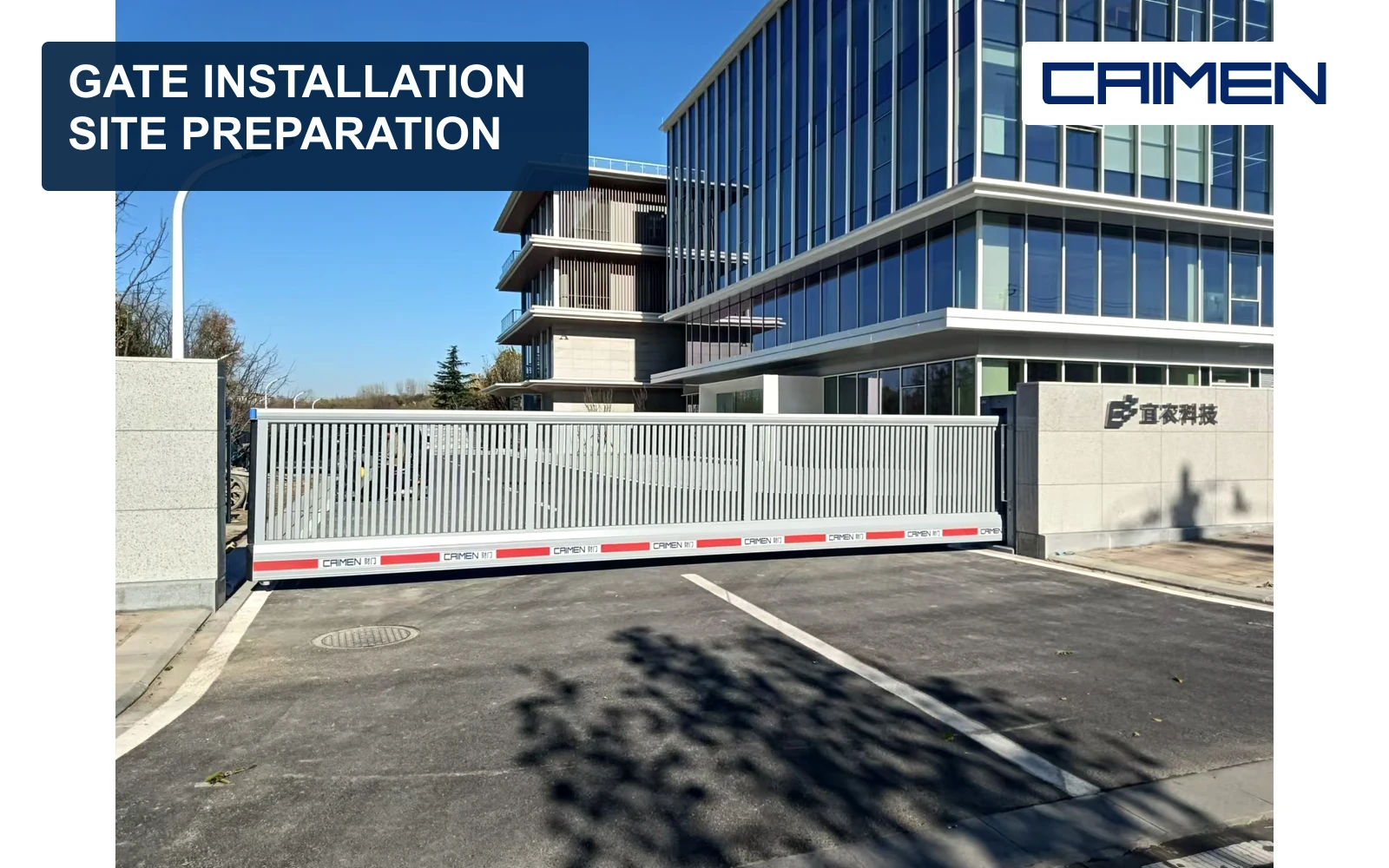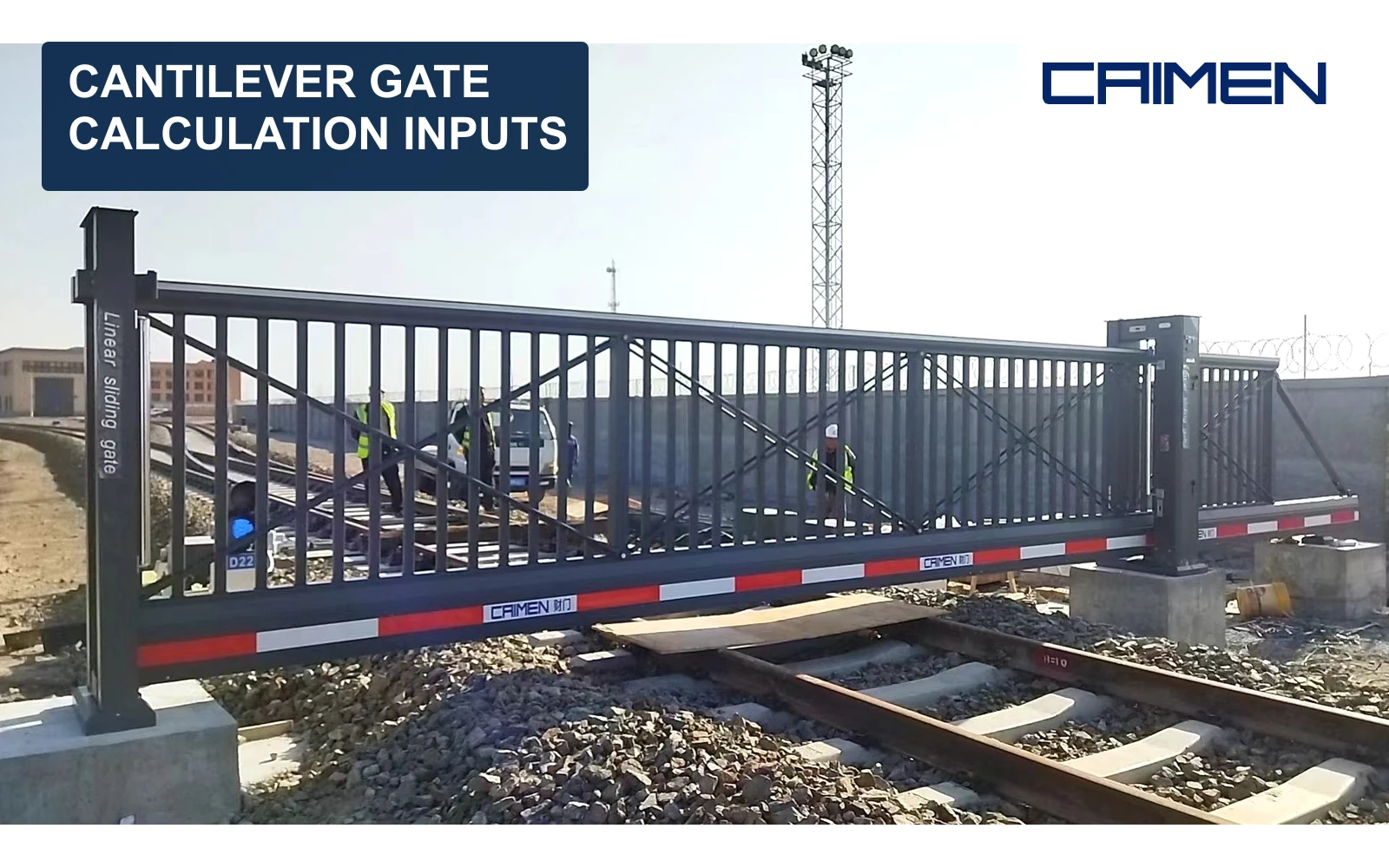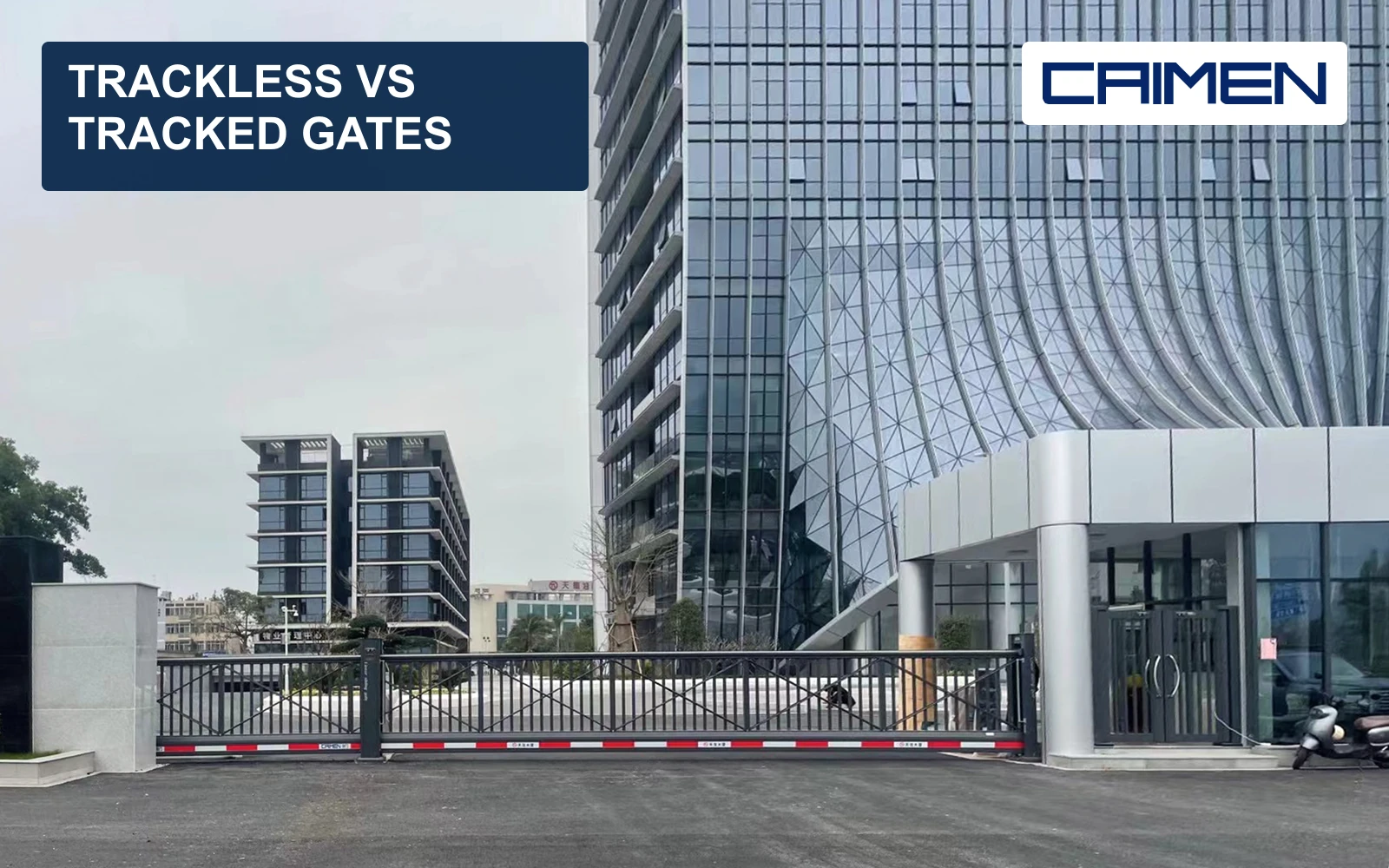
A trackless sliding gate avoids a continuous running rail across the driveway. In a cantilever arrangement, supports beside the entrance carry the moving leaf. A tracked sliding gate instead runs on wheels along a ground rail. The useful comparison is where each system needs support, clear space and routine attention at the actual entrance.
Neither arrangement is a universal answer to an uneven driveway or a narrow boundary. Removing the ground rail changes the running system; it does not remove the need to assess levels, foundations, movement space and powered-gate safety.
Start with the driveway surface
A tracked gate needs a suitable, even running line for its rail. That makes the condition of the proposed rail route part of the selection decision. A site with a stable prepared surface presents a different starting point from one where the running route would cross loose material or require substantial groundwork.
In our cantilever sliding gates, the running beam works with fixed carriages beside the entrance. There is no wheel-to-ground-rail interface in the vehicle passage. The support area and clearance beneath the moving leaf still require a site-specific arrangement; a trackless label does not establish suitability for every slope.
Separate rail cleaning from whole-gate maintenance
Mud, gravel and other debris on a tracked gate’s rail can interfere with the wheel path. Where vehicles regularly carry loose material through the entrance, access for clearing that rail matters. Snow and ice also need consideration at sites where they occur.
A cantilever system avoids that roadway rail-cleaning task, but its travel area must still remain clear. Snow, stored materials or vegetation can obstruct the leaf or the space into which it retracts. The operator, supports and protective equipment also remain part of the complete gate system. Trackless should not be read as maintenance-free.
The comparison is therefore between different maintenance demands, not between a gate that needs attention and one that never does. Record the actual contamination at the entrance and who can keep the relevant areas accessible. Do not assign a service interval from the gate type alone.
Treat drainage as a site question
A missing ground rail does not prove that an entrance will drain correctly. Record where water collects, what it carries across the entrance and where it leaves the site. These observations help distinguish a recurring obstruction on the running route from a wider drainage problem.
For a tracked proposal, show the rail route alongside the existing surface and drainage features. For a cantilever proposal, show the support area and the complete leaf movement route. These are coordination checks, not a drainage design. Changing gate type should not be used as evidence that standing water or unsuitable ground has been resolved.
Compare complete layouts, not just opening widths
Both systems need space beside the entrance for retraction. A cantilever leaf includes a rear section associated with its support arrangement, which can increase the required side envelope compared with a conventional tracked leaf. The actual difference depends on the selected designs; a fixed percentage is not a reliable site allowance.
| Site question | What to compare |
|---|---|
| Is the running route suitable? | Ground rail alignment versus beside-entrance support and leaf clearance |
| What reaches the entrance? | Debris on the rail route and obstructions throughout the movement area |
| Is water a recurring problem? | Observed collection and flow, with the proposed gate layout shown |
| Does the complete gate fit? | Opening, total moving leaf and unobstructed retraction envelope |
The site checklist for cantilever gate design separates the opening from the available runback. If a complete single leaf cannot fit, the choice may need to extend beyond this two-system comparison rather than forcing a smaller allowance into the drawing.
Keep safety separate from the support choice
Either powered arrangement needs assessment as a complete entrance, including people approaching it and the leaf passing fixed structures. A clear driveway rail route does not settle those hazards, and removing the rail does not settle them either. Select the mechanical layout around the site, then keep the operating conditions and protective measures tied to that actual system.