A dependable entrance needs attention beyond the motor. The gate frame, supports, drive system, controls, and safety devices all contribute to how your automatic gate operates.
At CAIMEN, we manufacture aluminum gates for residential and commercial entrances. We recommend planning maintenance around the complete installed system, with clear responsibilities for property owners, site managers, and qualified gate technicians.
Our automatic gate opener maintenance checklist helps you organize routine observations, prepare for servicing, and recognize changes that need attention. Use it alongside the instructions supplied with your gate and operator. The correct procedures and service intervals depend on the equipment installed.
Start with Your Gate’s Equipment Details
Keep your gate drawings, operator model, equipment manuals, commissioning information, and service provider’s contact details together. Include the instructions for any fitted safety devices and backup power equipment.
For a new entrance, establish this maintenance file during handover. Our cantilever gate installation guide provides related information to help you prepare for an installation project.
We recommend agreeing on which checks site users can perform and which tasks require a qualified technician. Everyday observations can identify visible damage or changes during normal operation. Electrical work, mechanical adjustments, and technical safety tests require appropriate competence.
Before hands-on work, the gate must be secured against unexpected movement and the relevant energy sources isolated according to the equipment instructions. Remember that switching off mains power may leave battery or solar supplies connected.
Set a Maintenance Schedule for Your Entrance
Follow the schedule supplied with your installed gate and operator. A private driveway and a busy commercial entrance may need different service arrangements, even when their gates look similar.
Ask your service provider to account for traffic levels, dust, coastal exposure, drainage, and weather when planning inspections.
| When | What to arrange |
|---|---|
| During normal use | Notice changes in sound, travel, stopping position, or control response. Report anything unusual. |
| At the intervals specified in the equipment manuals | Complete permitted user checks and arrange the required professional inspections and tests. |
| After impact, flooding, or visible storm damage | Restrict use if safety is uncertain and have affected equipment assessed. |
| After changes to the gate or its use | Review maintenance needs when gate construction, controls, or traffic levels change. |
For shared entrances, assign one person to manage fault reports and service bookings. This keeps recurring issues visible and makes outstanding work easier to track.
Our Seven-Point Automatic Gate Opener Maintenance Checklist
1. Keep the Full Travel Area Clear
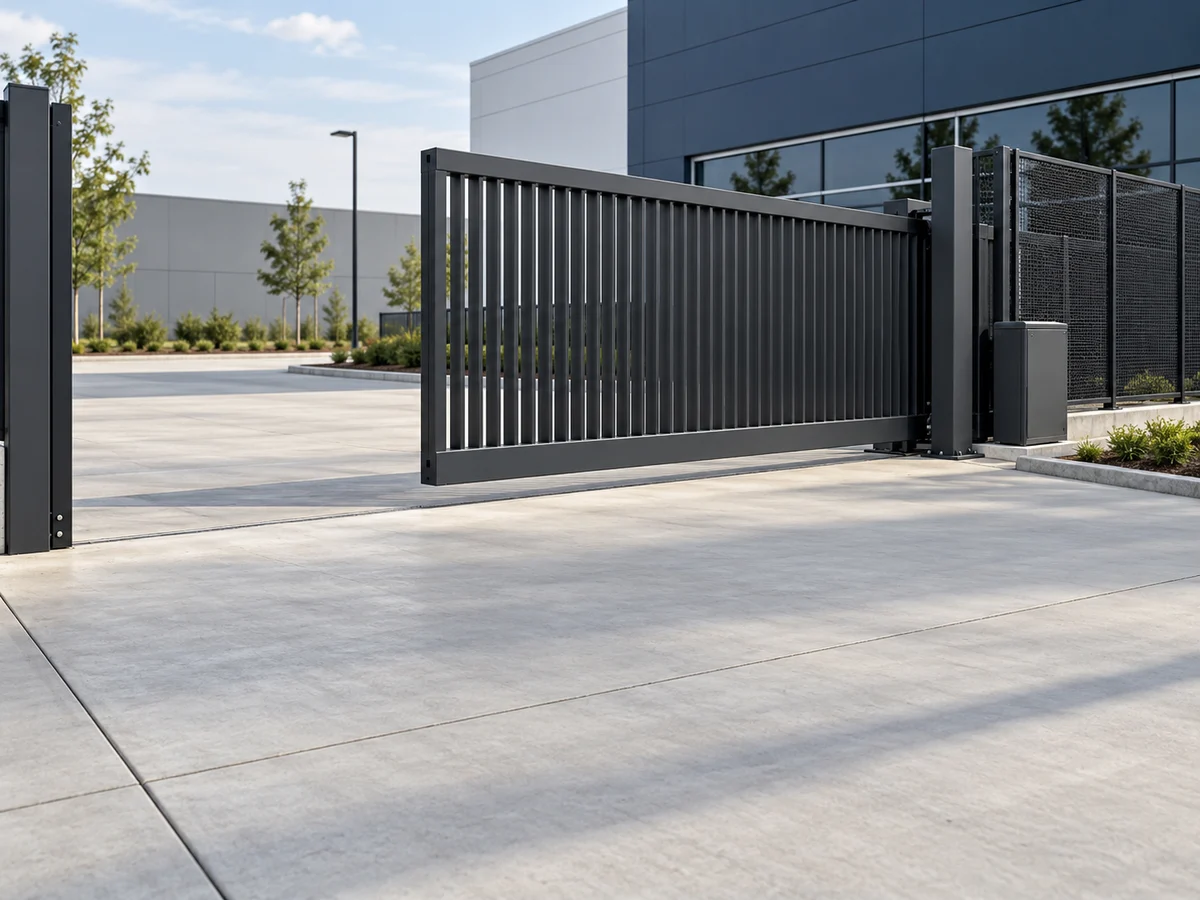
Check the vehicle opening and the space where a sliding gate retracts or a swing gate opens. Look for branches, loose debris, stored materials, and parked vehicles that could interfere with movement.
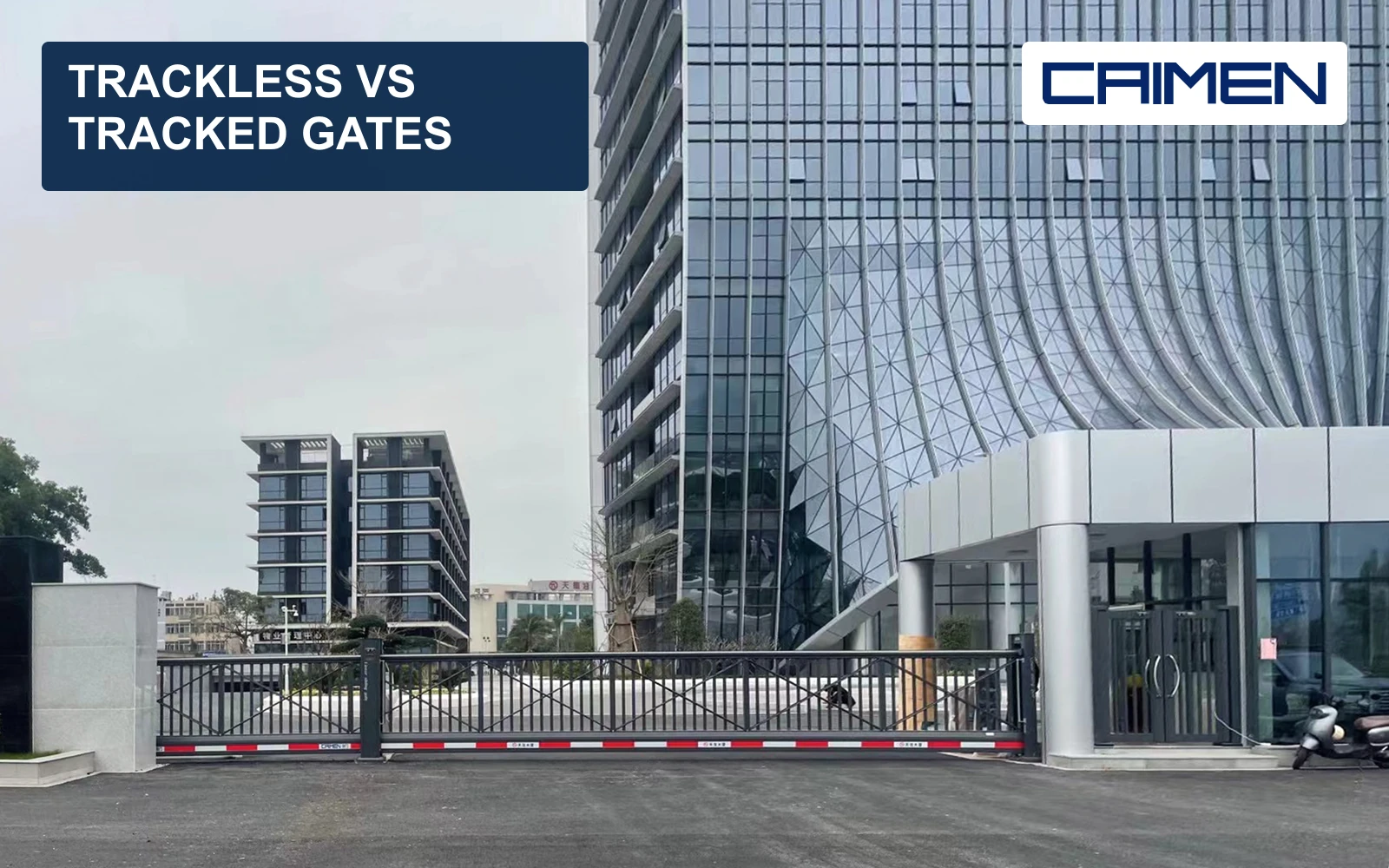
For tracked sliding gates, include the ground rail in your observations. Cantilever gates have no continuous running rail across the driveway, but their movement and retraction areas still need to remain clear. Our guide to trackless sliding gates explains these arrangements.
Arrange removal of obstructions with the gate secured against operation. Keep the pedestrian route clear so people are not directed into the gate’s travel area.
2. Watch for Changes in Movement
During normal use, observe the gate from a safe position outside its movement area. Record new scraping, vibration, hesitation, or a change in its stopping position.
Be specific. “The gate stops halfway while closing” gives your technician more useful information than “the motor is weak.” Note the direction of travel, where the issue occurs, and any displayed fault code.
Visible sagging, damaged supports, or unexpected movement require prompt attention. Do not keep cycling a faulty gate to reproduce the problem or increase its force setting to overcome resistance.
3. Include Supports, Fixings, and Drive Components
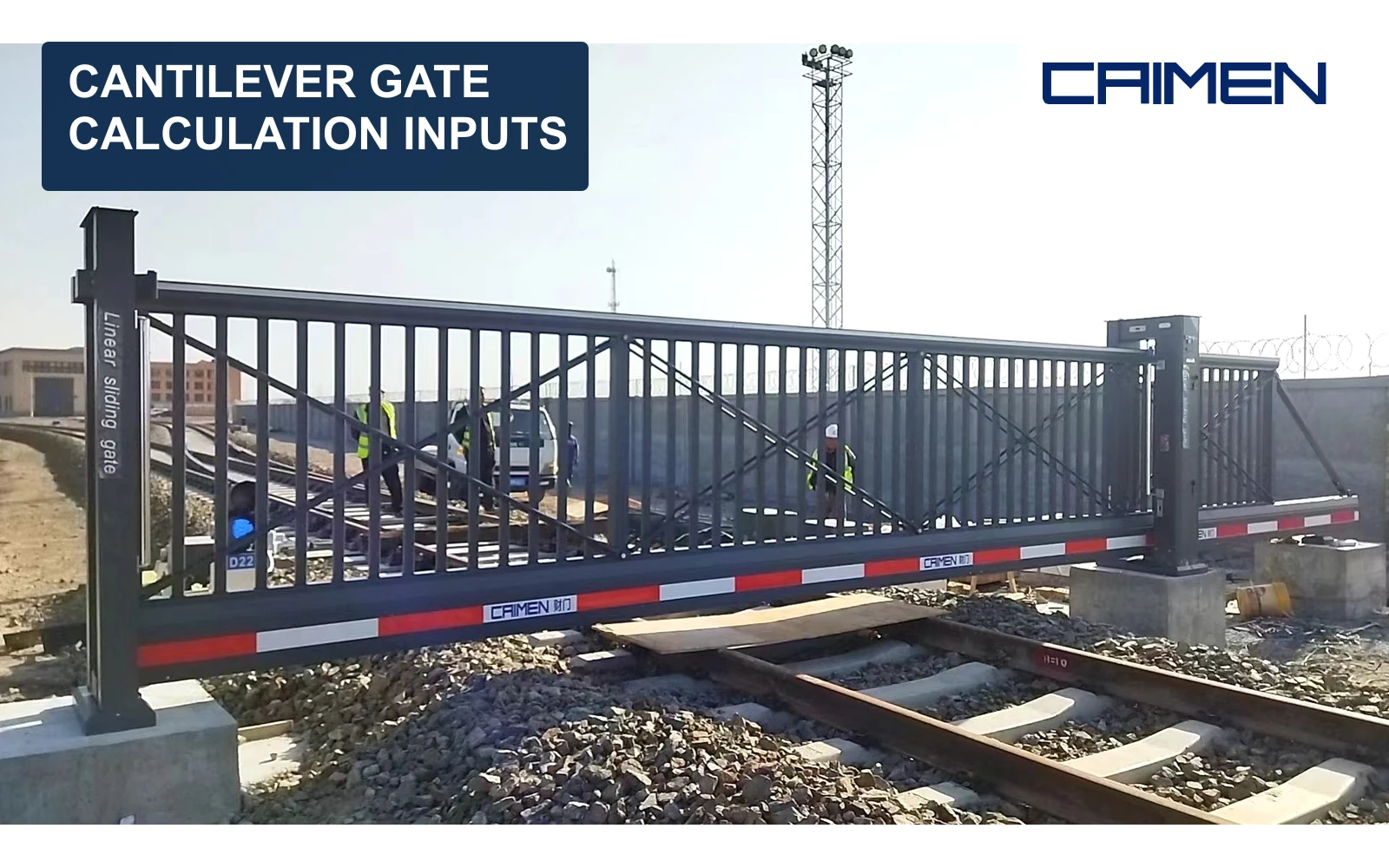
The service scope should match your gate’s construction. For a cantilever gate, this includes the supporting carriages, running beam, guides, and receiving arrangement. For a swing gate, it includes the hinges, supports, and operator attachments.
Ask your technician to check the fitted drive components and mounting points during the same visit. A chain drive, rack-and-pinion system, and swing operator have different inspection requirements.
For aluminum gates, include the finish and visible fixings in the inspection. Report damaged coating, loose-looking components, or impact marks so the appropriate cleaning, repair, or adjustment method can be confirmed.
4. Include Safety Devices in the Service Plan
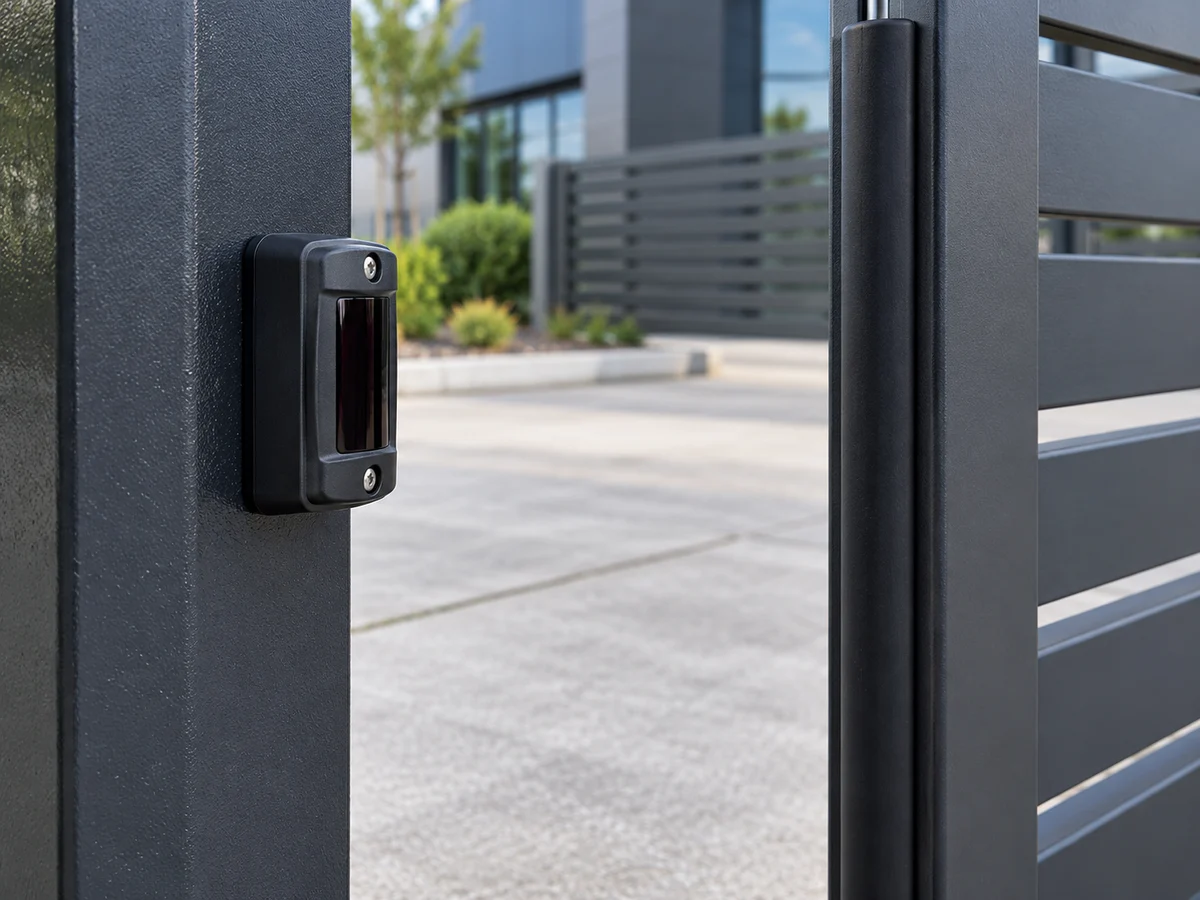
Photocells, safety edges, guards, and other protective measures need attention alongside the operator. A gate responding to a remote control does not confirm that its protective functions are working correctly.
Keep sensor housings and their surroundings free from obstruction. Carry out exterior cleaning only as permitted by the equipment instructions. Report displaced devices, cracked covers, damaged visible cables, or persistent fault indications.
Arrange functional checks and any required force measurements with a competent gate professional. Never bypass a safety device or use a person as a test obstruction.
5. Lubricate Only Where Specified
Lubrication requirements vary by component. Some parts need a specified lubricant at defined intervals; others are sealed or designed to operate without added lubrication.
Before applying grease or spray, confirm the correct product, application point, and amount in the relevant instructions. Do not assume every rack, roller, bearing, or hinge needs the same treatment.
We recommend recording the approved lubrication points in your maintenance file. This gives future service visits a consistent reference and avoids unnecessary applications.
6. Review Power, Controls, and Manual Release
Include the power supply, control equipment, and any backup battery in professional servicing. From outside the equipment enclosure, report visible damage, signs of water entry, or unusual control behavior. Leave enclosure access and electrical checks to qualified personnel.
Keep manual-release instructions available to authorized users. Ask your installer to demonstrate the procedure, including how to secure and control the gate after release. Never release a moving gate.
If operation becomes unreliable, record which controls are affected. Knowing whether the issue occurs with one remote or with every access method helps your technician investigate without assuming the cause.
7. Record the Work and Follow Up
A useful service record explains what was checked, what was changed, and what still needs attention. It should state the equipment’s service status and the next planned inspection date.
Keep unresolved defects visible until they have been addressed. For properties with several entrances, maintain a separate record for each gate so equipment details and service histories do not become mixed.
Match the Checklist to Your Gate Type
Our aluminum gate range includes different operating arrangements. Maintenance should reflect the system selected for your entrance.
| Gate type | Main mechanical items for professional inspection | What site users can report |
|---|---|---|
| Tracked sliding gate | Running wheels, ground rail, guides, and drive components | Debris, visible rail damage, or uneven movement |
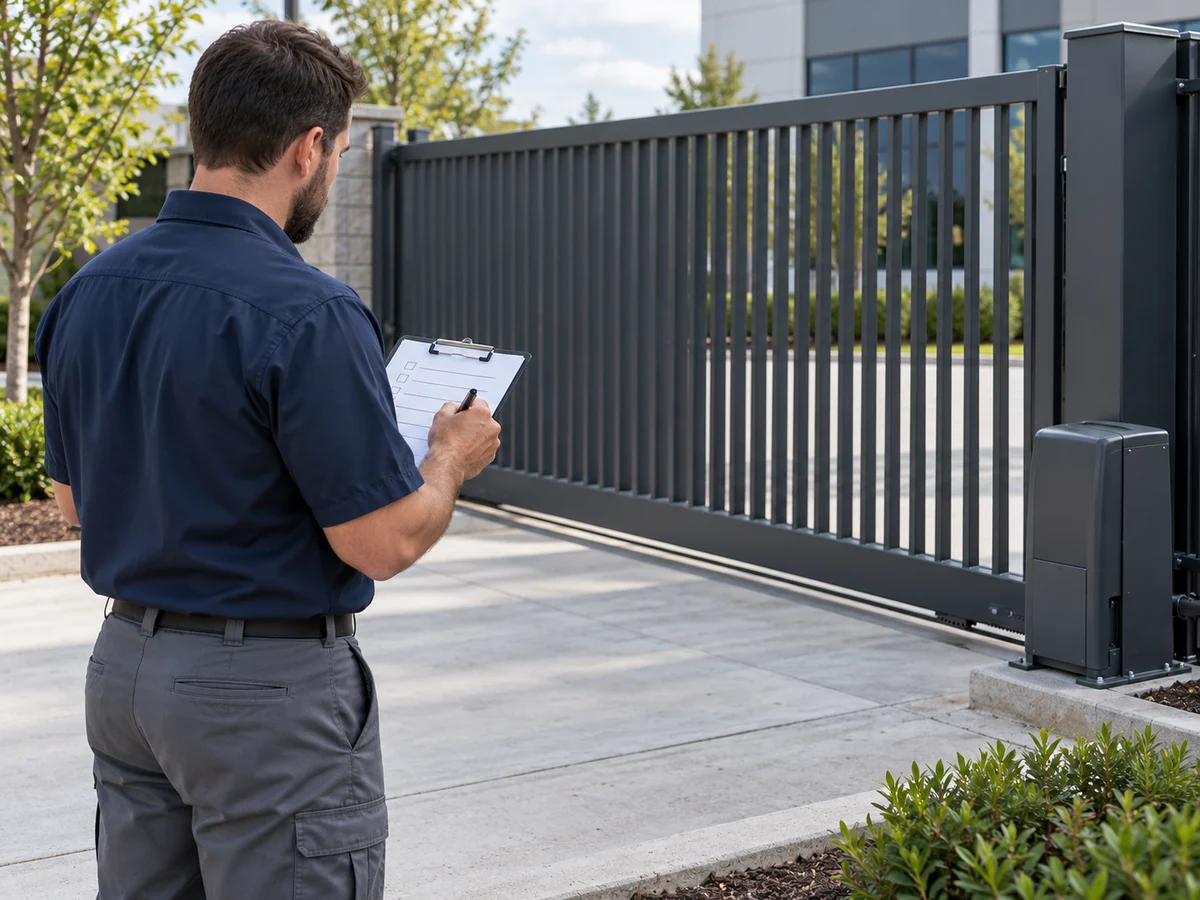
| Cantilever sliding gate | Carriages, running beam, guides, supports, and receiving arrangement | Changes in clearance, alignment, or travel noise |
| Swing gate | Hinges, posts, operator attachments, and stops where fitted | Sagging, scraping, or changes in how the leaves meet |
| All automatic gates | Controls, power supplies, protective devices, and release equipment | Fault indications, damaged devices, or unreliable operation |
Our aluminum cantilever sliding gates keep the driveway free of a continuous ground rail. Their supports, drive equipment, and safety devices still require inspection and servicing.
For residential swing gates, include each leaf and its operating equipment in the maintenance plan. Aluminum construction does not eliminate maintenance of hinges, fixings, finishes, or automation.
Keep a Simple Gate Maintenance Record
Use the following format for each entrance. Consistent records help your service provider understand changes between visits.
| Record field | Details to include |
|---|---|
| Gate identification | Location, project reference, gate type, and operator model |
| Observation date | Date, time, and relevant conditions |
| Issue reported | What happened, direction of travel, and gate position |
| Supporting information | Displayed fault code and safely obtained photographs |
| Service outcome | Components inspected, work completed, and test results |
| Follow-up | Outstanding actions, responsible person, service status, and next inspection date |
Take photographs while the gate is stationary and from outside hazardous areas. If the gate has been struck, appears unstable, moves unexpectedly, or has a failed protective device, suspend normal use and arrange assessment under the site’s shutdown procedure.
Frequently Asked Questions
Can I maintain an automatic gate opener myself?
Carry out only the user tasks allowed by your equipment instructions and for which you have been trained. These may include routine observations and permitted exterior cleaning. Repairs, electrical work, mechanical adjustments, and technical safety tests require appropriate competence.
Is annual servicing enough?
There is no single interval suitable for every entrance. Follow the equipment schedule and have your service provider account for traffic and site conditions. Some checks may be required more frequently than a full service visit.
Should I grease the gate rack and rollers?
Only if the instructions for those components specify it. Lubrication requirements differ, and some parts need no added lubricant. Confirm the product, quantity, and application points before treating any component.
Are cantilever gates maintenance-free?
No. They remove the need to maintain a continuous running rail across the driveway, but the gate still has supports, guides, drive components, and safety devices that need attention.
Contact CAIMEN About Your Gate
For product information relating to your CAIMEN gate, contact our team with your project reference, gate type, operator details, and relevant photographs. These details help us identify the equipment and discuss the product information you need. Arrange on-site inspection, adjustment, and servicing with a qualified local gate professional.