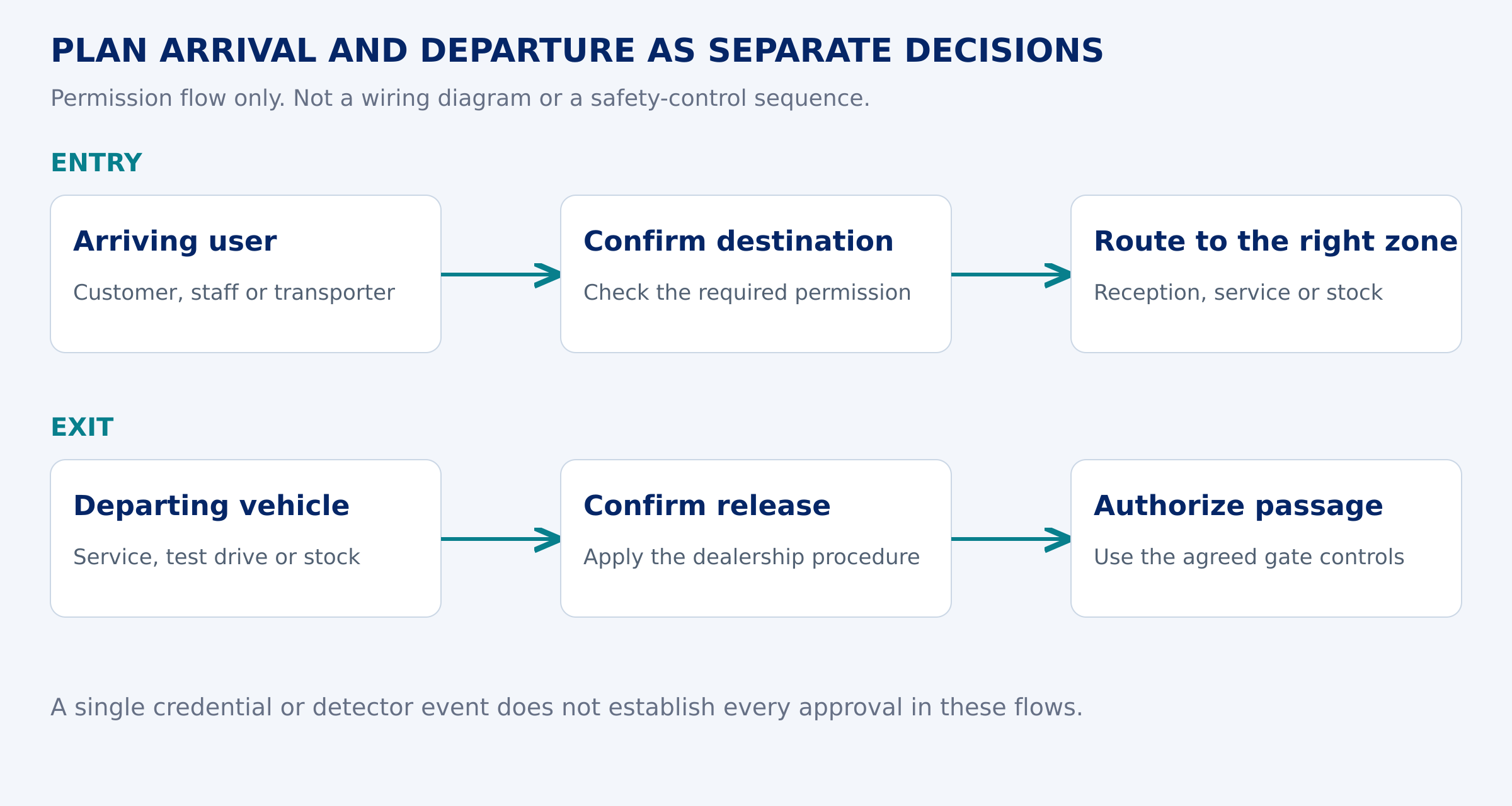
Car dealership gate security needs a clear plan for arriving customers, staff moving stock and vehicles leaving the site. A service customer should be able to reach reception without passing through the restricted inventory yard. A vehicle approved to enter for repair may still need a separate release decision before collection. Define those movements before choosing the gate hardware.
At CAIMEN, we review gate dimensions, movement space and operating interfaces around the entrance brief. For a dealership, that brief should explain which areas remain public during opening hours, which hold restricted stock and who can authorize entry and exit when the usual reception team is unavailable.
Map the vehicle movements before assigning gates
Mark the destinations on a site plan, including any shared driveway. Give each movement a stopping point and a responsible member of staff where approval is needed. A dedicated gate for every activity is not always possible; the operating rules still need to distinguish the activities.
| Movement | Destination | Approval to define |
|---|---|---|
| Showroom visitor | Customer parking and reception | Public arrival route and any visitor check |
| Service customer | Reception and agreed handover bay | Appointment, vehicle custody and collection release |
| Staff or test drive | Authorized work area or approved route | Staff permission and departure/return responsibility |
| Stock delivery or collection | Designated unloading or collection area | Booking, vehicle list and receiving contact |
| Recovery vehicle | Agreed service or recovery position | Staff assistance and space for the vehicle combination |
Make the customer entrance easy to understand
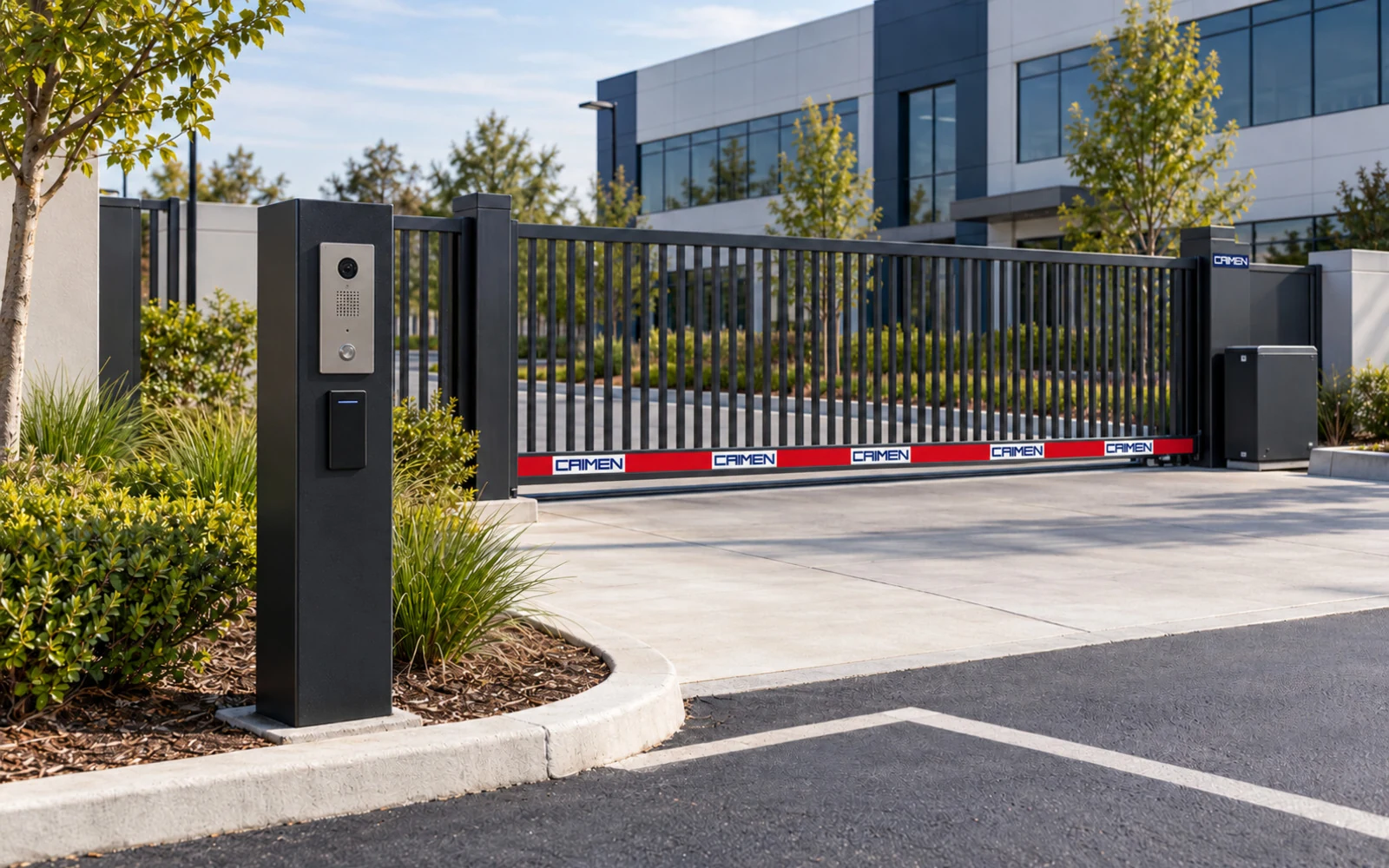
Plan the first visit from the driver’s viewpoint. The customer should be able to identify showroom parking or service reception before joining a queue. Position any intercom or reader where the driver can stop and use it without blocking the pedestrian route or standing in the gate’s movement area.
Where sales and service share an entrance, check the morning service peak alongside ordinary visitor arrivals. A lane that works with a single parked car may become difficult when several customers arrive together. Include somewhere to wait or turn around if a visitor reaches the wrong entrance.
After-hours service drop-off needs its own arrangement. Agree where the customer may park, how staff will identify the vehicle and when custody is accepted. A key deposit arrangement or a booking does not, by itself, establish permission to open a restricted stock gate.
Treat vehicle exit as a separate approval
Write an exit rule for each activity. Service staff may need to confirm that a repaired vehicle is ready for handover. A test drive needs an agreed departure and return process. A transporter collecting stock needs a named contact and a confirmed vehicle list. The access system should support the dealership’s release procedure.
Check what requests the exit gate to open. If a detector automatically requests passage for any approaching vehicle, confirm whether that behaviour suits the stock area. If staff approval is required, specify who gives it and how an exception is handled. Vehicle-presence detection and protective functions do not confirm that the vehicle is authorized to leave.
Separate the stock boundary from everyday reception
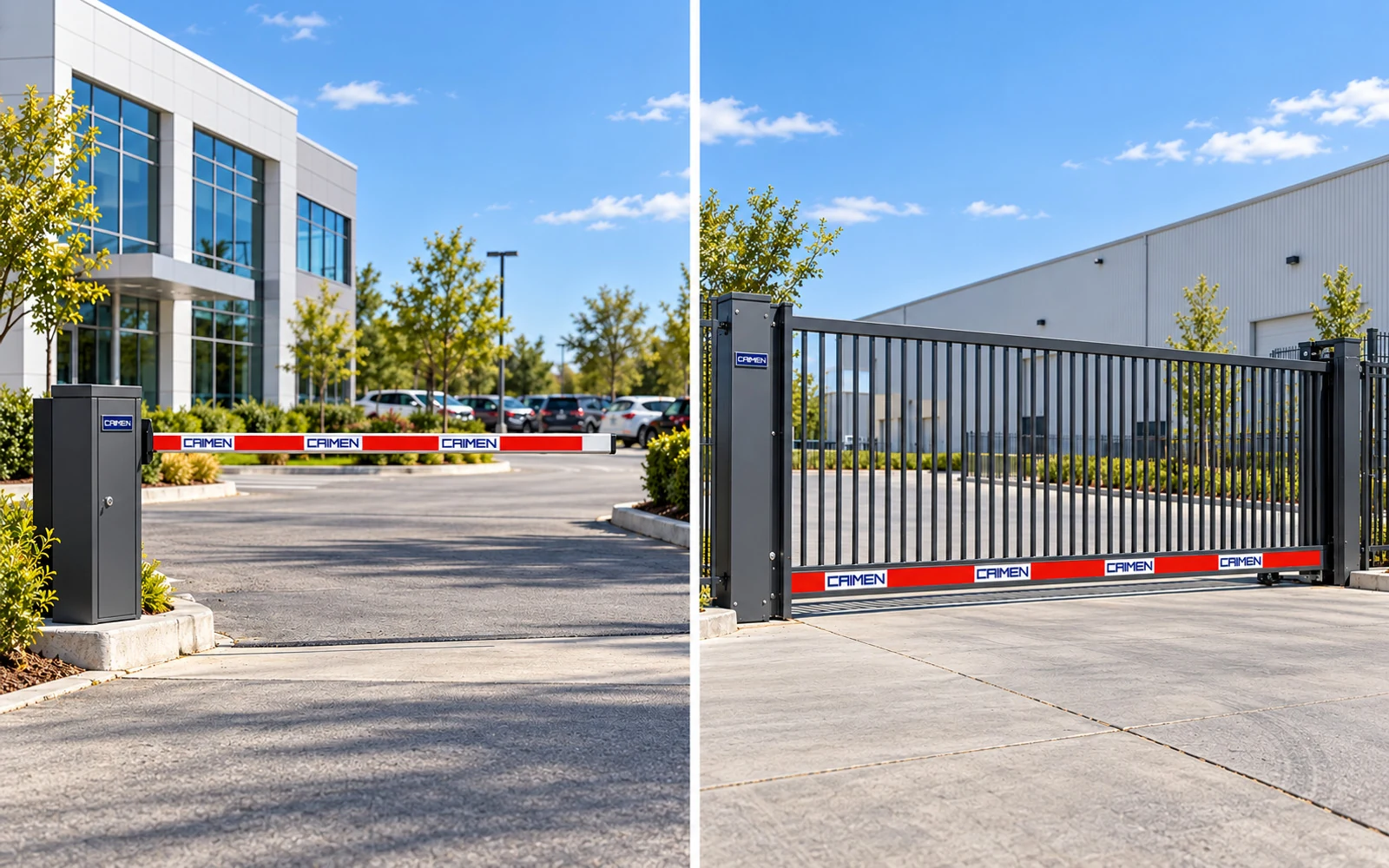
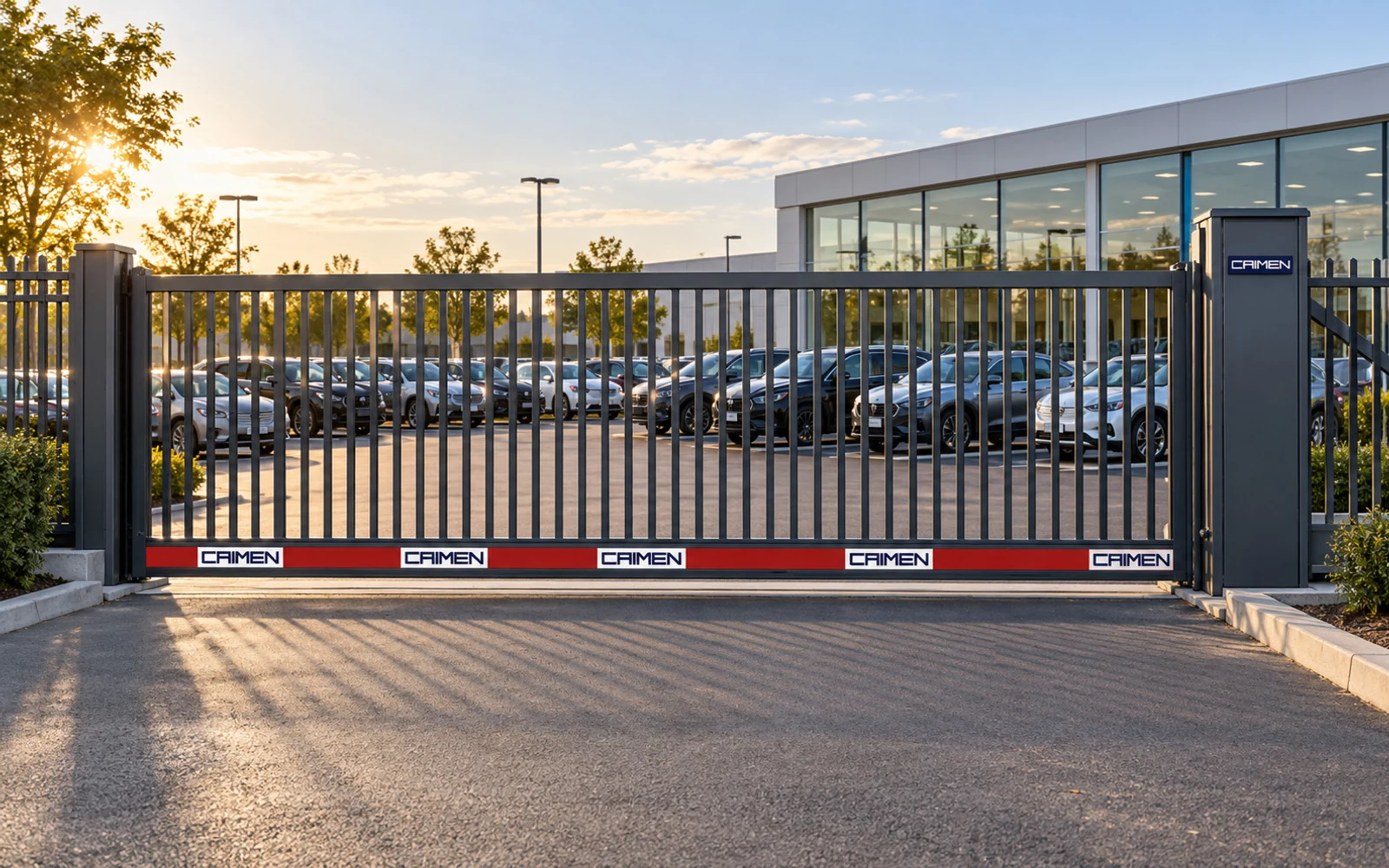
A sliding gate can close an opening in the stock-yard fence while the public reception driveway follows a different route. Review the gate height and infill against the boundary design and the visibility the dealership wants. An open-picket design preserves sightlines; screening changes visibility and must also be assessed for the selected gate structure and exposure.
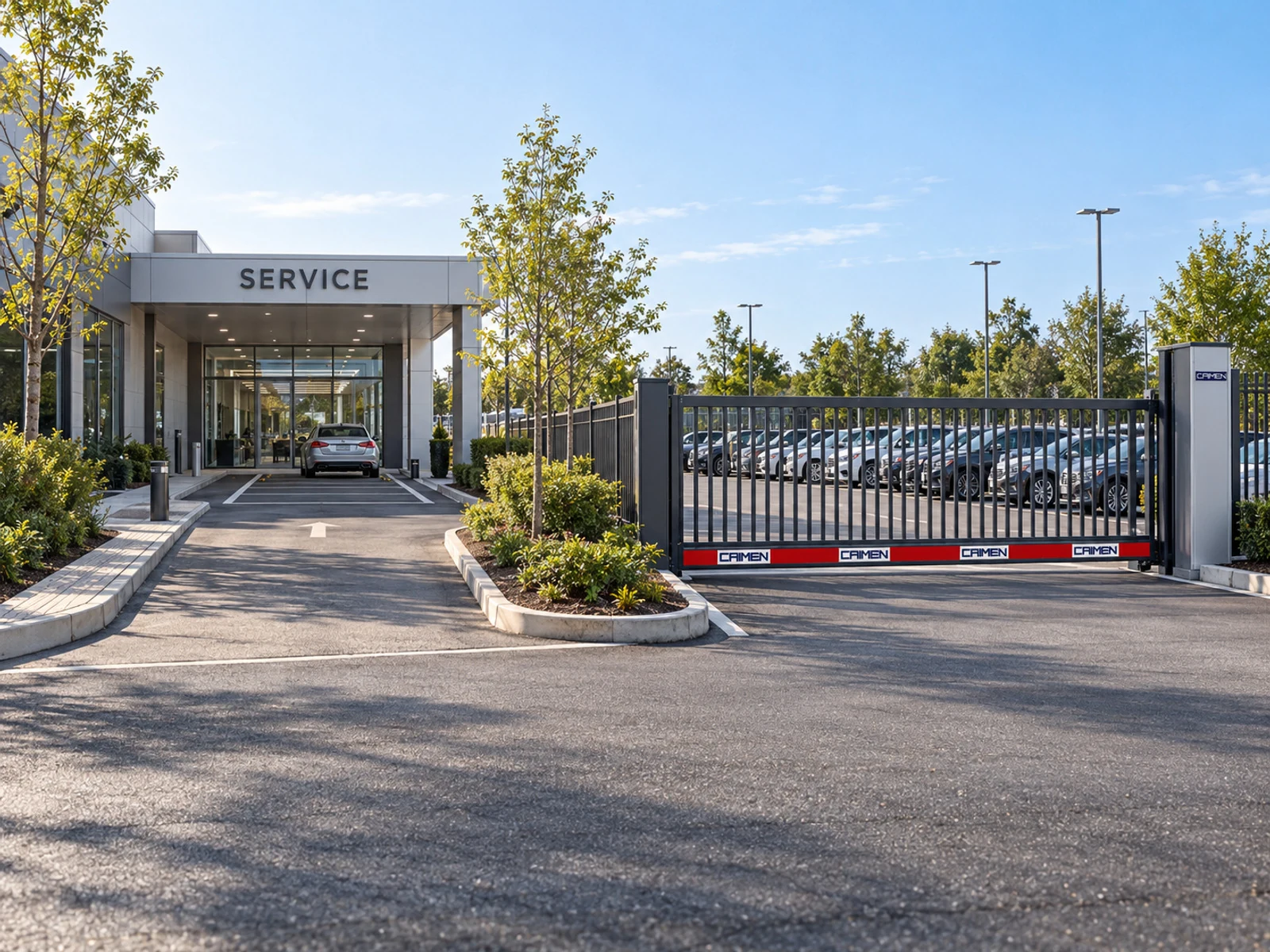
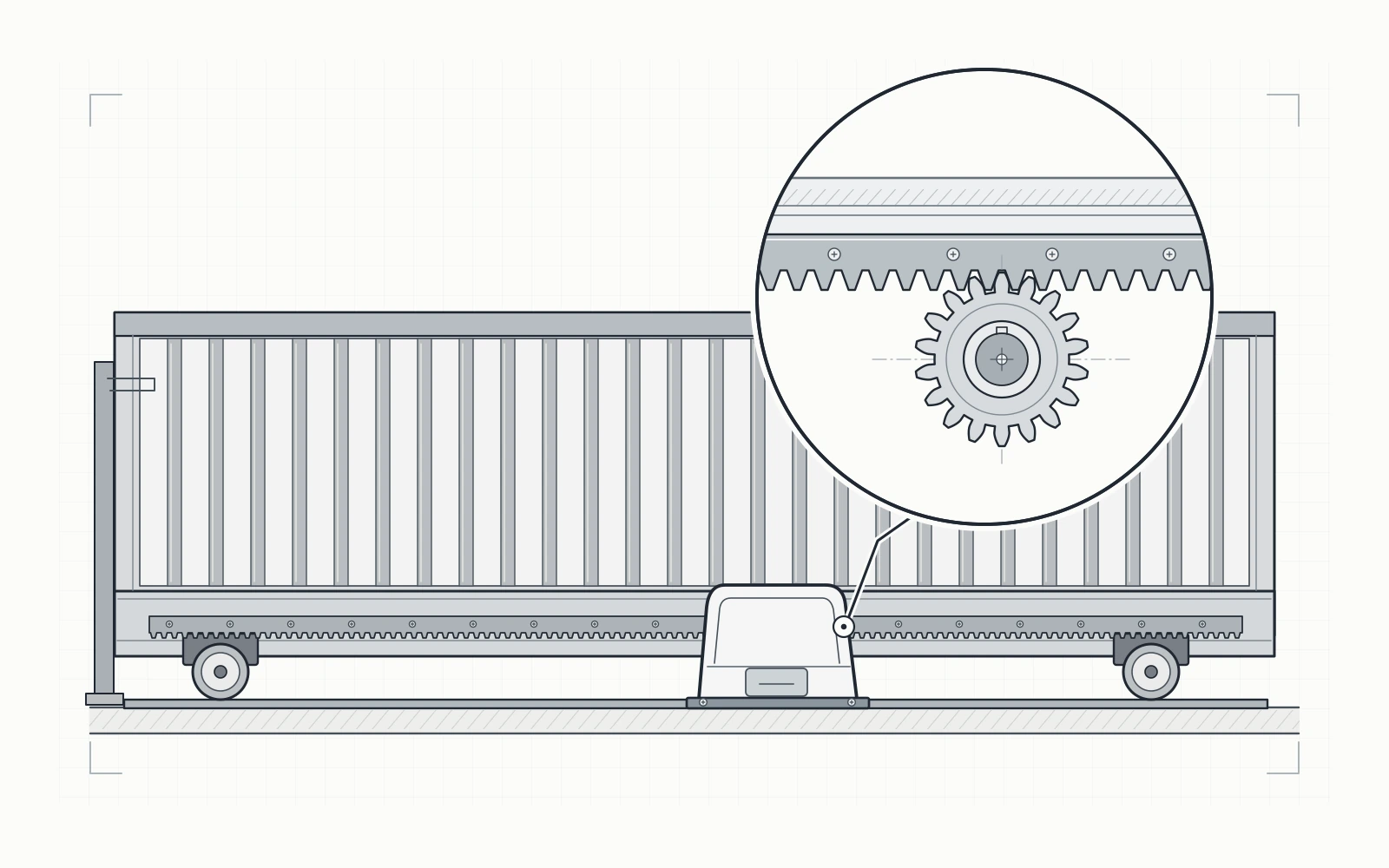
Our aluminum cantilever sliding gates keep a ground rail out of the vehicle passage. They still require suitable supports, foundations and side space for the full moving leaf, including its counterbalance section. Mark the complete runback area so parked display cars cannot occupy it.
If that side space is limited, a telescopic sliding gate may be suitable for review. The required opening, leaf arrangement and retraction space must be checked together. Neither gate type should be described as crash-rated unless the specified assembly has the required tested performance.
Allow for transporters, recovery vehicles and queues
Supply the dimensions and turning requirements of the largest vehicle expected to use the entrance. Include transporter trailers, recovery vehicles and a car being towed. Have the approach, turning path and changes in level reviewed; a clear width alone does not establish that the vehicle can negotiate the entrance.
Check the waiting position with the gate fully closed and fully open. The vehicle must clear the moving equipment, and the planned queue should fit within the site without obstructing the public road or pavement. Do not use the gate’s side travel area as a delivery waiting bay.
Define operating modes and staff permissions
| Operating mode | Decision to record |
|---|---|
| Normal opening hours | Which reception routes are open, and which stock gates still require permission? |
| Late service collection | Who checks the handover and authorizes departure after reception closes? |
| Closed site | Which openings close, who confirms the gate position, and who retains access? |
| Fault or power outage | Who takes control, what operation remains available, and how is the area managed? |
Assign credentials to the people who need them and define how permissions are removed when roles change. For contractors, agree an end date and a responsible host. If license plate recognition is selected, confirm how vehicles are enrolled and removed; recognizing a stock vehicle’s plate does not independently approve its sale, collection or driver.
Our remote gate access control guide explains visitor and staff credential options. For the dealership brief, also distinguish an accepted credential, an opening command and feedback that the gate is physically open or closed. Specify the feedback needed by reception or security staff and how a lost connection is handled.
Keep people outside the vehicle gate movement zones
Customers may walk between parked display cars, the showroom and service reception. Plan a continuous pedestrian route that stays clear of the vehicle gate, its runback and any barrier arm. A separate pedestrian gate can be assessed where controlled foot access is needed. Coordinate its opening and access arrangements with the actual site requirements.
Ask the installer to assess the complete moving system and its protective measures. Agree the power-loss response, authorized manual release and emergency access arrangements for the project. During handover, check these functions with the people who will operate the entrance, using the approved procedures.
Check the completed entrance before handover
- Walk the customer route from the road to reception and back to the exit.
- Check the longest vehicle’s approach, waiting position and turn with the agreed layout.
- Open the sliding gate fully and confirm that the leaf clears the opening and its runback stays free.
- Test entry permissions and vehicle release approvals as separate operating cases.
- Verify position feedback and the agreed response to a lost connection or power failure.
- Record the operating instructions, service contact and responsibility for routine checks.
Frequently asked questions
Can a dealership use one entrance for entry and exit?
Yes, where the layout and operating arrangement support it. Review opposing vehicles, customer queues and transporter movements together. Specify how staff manage conflicting requests and where a driver waits while the entrance is occupied.
Should the gate stay open during business hours?
That depends on the area it controls. A public reception entrance and a restricted stock yard can use different schedules. Define the boundary that must remain controlled and assign responsibility for changing operating modes.
Does a gate access log prove which vehicle left?
Only if the selected system records and links the events needed for that purpose. A credential event alone may show a request or permission decision. Confirm vehicle identification, passage records and any camera association separately, with appropriate access and retention rules.
Prepare a dealership entrance brief for CAIMEN
Send our team your site plan with the opening dimensions, side space and photographs. Mark customer reception, service routes and the stock boundary. Include the largest vehicles, peak arrival periods, opening hours and the approvals required for vehicles to leave. We can review the gate configuration and relevant interfaces against that brief.