A gate drop rod is a vertical bolt that slides through guides on a swing gate and enters a receiver in the ground. It holds that leaf in position. If yours gets stuck, first identify whether it binds in the guides, catches at the ground socket or remains held by its retaining mechanism. Each points to a different repair.
Misalignment, packed debris, corrosion and a bent shaft can all prevent movement. A rod that misses the hole may indicate a sagging leaf or moving post. At CAIMEN, we recommend checking the gate’s position before treating every stiff drop rod as a lubrication problem.
How a gate drop rod works
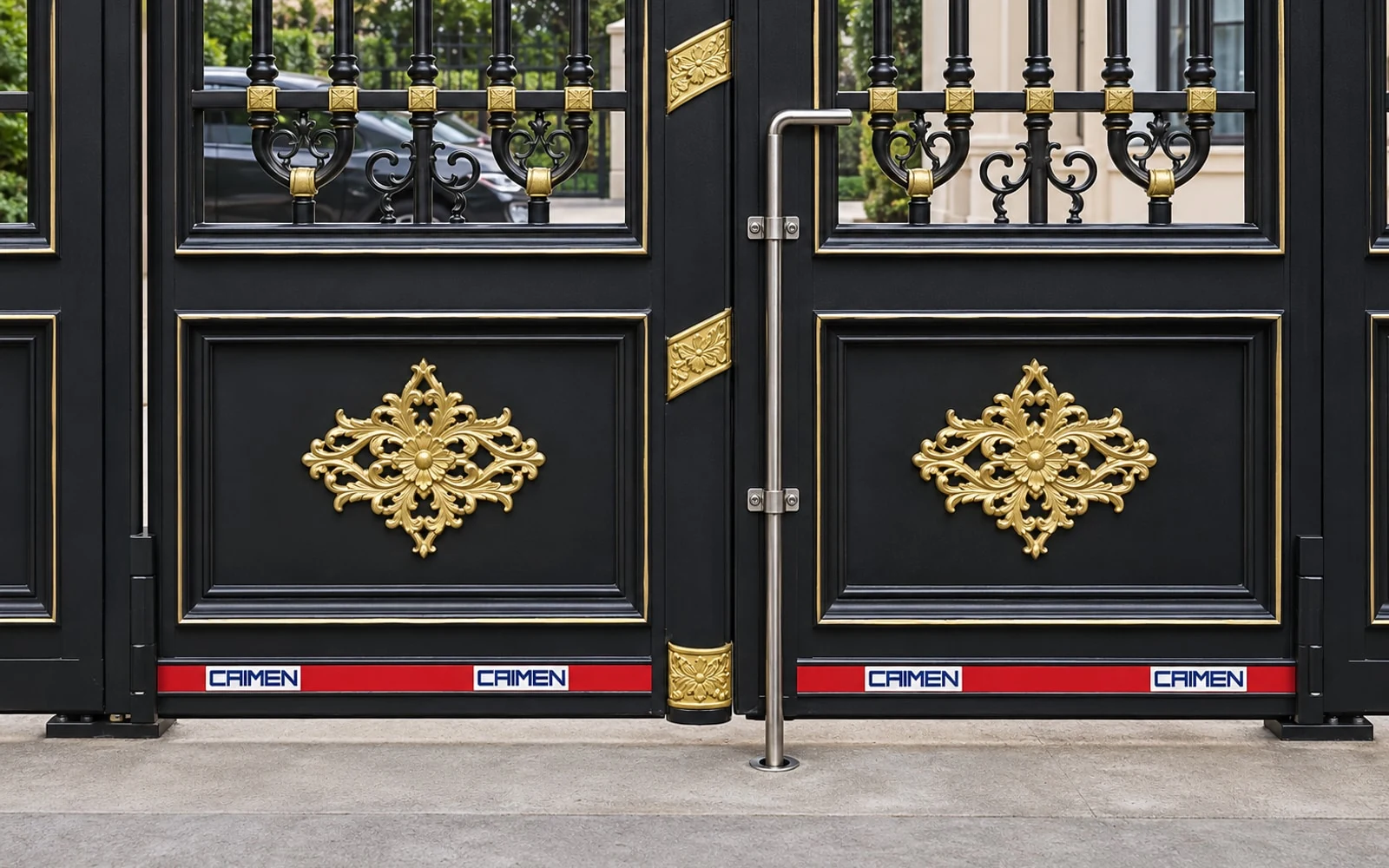
The rod is also called a cane bolt or gate drop bolt. In a common double swing gate arrangement, it is fitted near the meeting edge of the less frequently used leaf. Lowering it into the ground receiver pins that leaf while the other leaf opens and closes against it. Some entrances have a rod on each leaf.
To move the pinned leaf, the rod must be lifted completely clear of the receiver and retained above the surface throughout the swing. Depending on the design, a handle, tab, bracket or keyed mechanism holds it up. Some rods require rotation to engage or release that feature; follow the instructions for the fitted model.
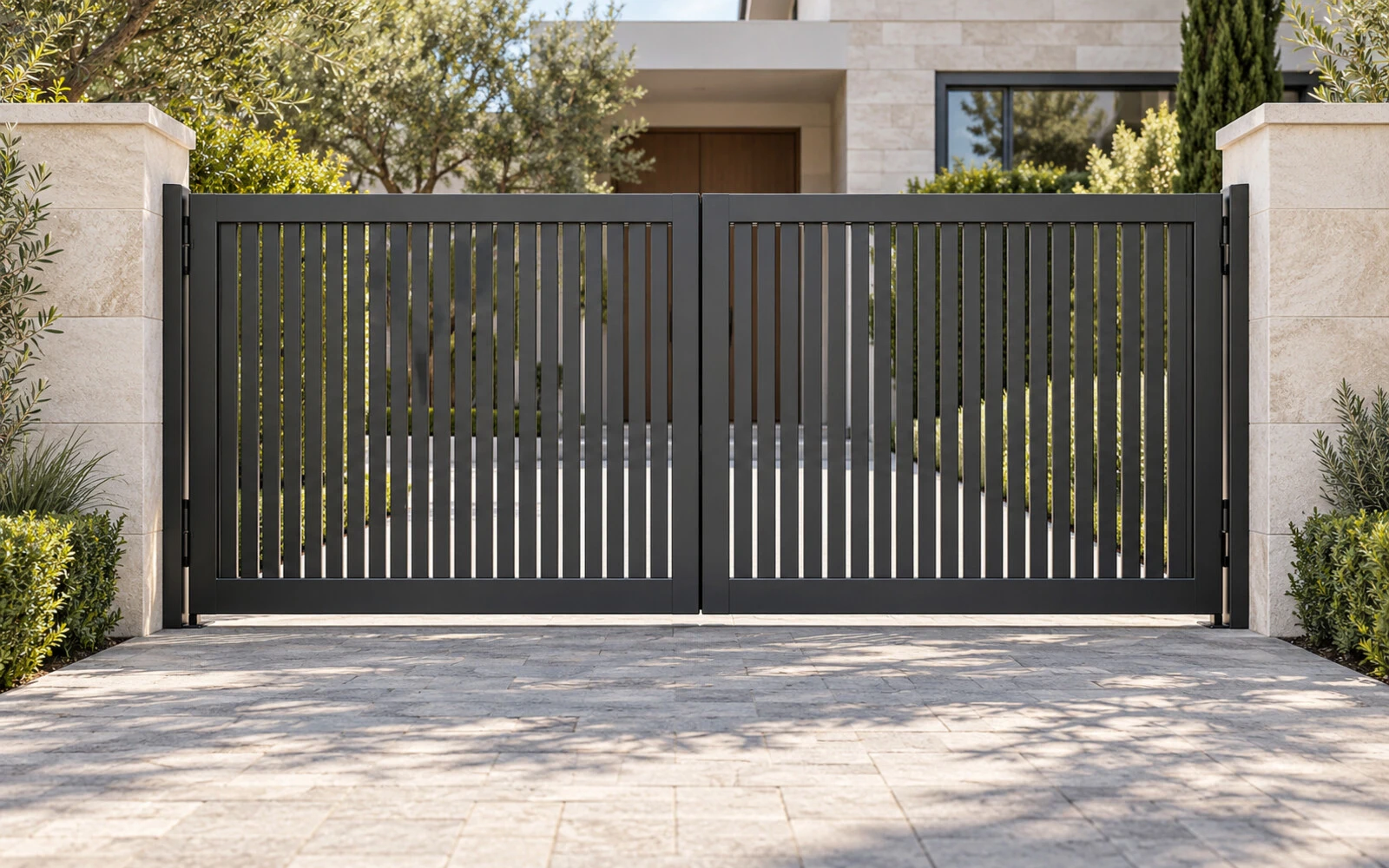
A separate receiver may hold the leaf open where the installation has been designed for that purpose. The rod does not lift the gate or correct its hinge geometry. For the wider gate arrangement, see our residential swing gates.
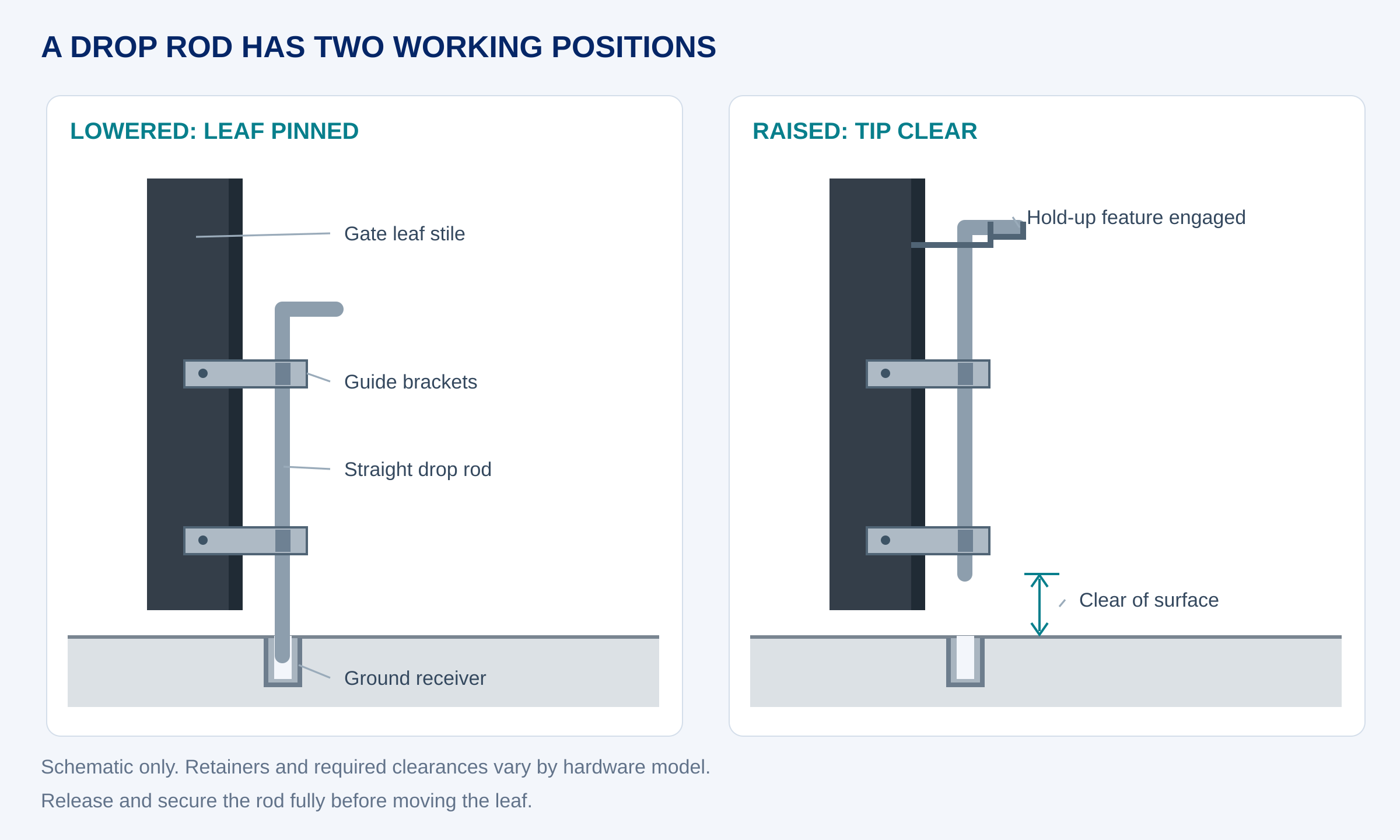
Find where the drop rod is binding
Before touching the hardware, secure the leaf against wind and unexpected movement. On an automated gate, authorized personnel must isolate all relevant energy sources and follow the operator’s instructions. A remote control being out of reach does not isolate the system. Keep hands away from the meeting edges and never release an unsupported heavy leaf.
With the gate safely controlled, note the rod’s position when resistance begins. If it moves freely until its tip reaches the ground, focus on the receiver and alignment. Resistance while the tip is clear of the ground points toward the shaft, guides or retainer. Stop if a light, normal operating effort will not move it.
| What you notice | What it may indicate | What to check next |
|---|---|---|
| Rod hits the rim instead of entering | Leaf or receiver is out of position | Compare the closed-leaf alignment and recent ground work. |
| Rod enters only partway | Debris, ice or an obstructed receiver | Inspect the visible socket opening with the leaf secured. |
| Rod is stiff while clear of the ground | Bent shaft, corrosion or misaligned guides | Inspect the exposed rod and guide positions. |
| Rod will not release with both leaves shut | A lock or second-leaf interlock may be engaged | Find the specified unlocking and opening sequence. |
| Rod drops back down after lifting | Holding feature is not engaged or is damaged | Check its retaining action before moving the leaf. |
Why the rod no longer lines up with the hole
Look at the whole opening. A changed center gap, a latch that now needs lifting, scrape marks on the paving or a tilted post can help locate movement in the gate assembly. If the leaf has dropped, moving the socket may hide the symptom while leaving the hinge or support problem unresolved.
Recent paving work can also change the relationship between the leaf and receiver. A raised surface may reduce clearance or bury the socket; a displaced receiver may no longer sit beneath the rod. Have the installer check the finished levels, gate alignment and receiver mounting together. Avoid bending the rod sideways or widening the hole as the first response.
On a double gate, also check the intended closing order. Some locking drop bolts are deliberately blocked by the second leaf when it closes. Forcing that mechanism while both leaves are shut can damage it. The manufacturer’s release sequence takes priority over a generic lift-and-turn method.
Debris, corrosion and freezing in the receiver
The ground receiver, also sold as a drop rod receptacle, collects material from its surroundings. Sand, gravel and soil can stop the rod before it reaches its normal seated position. A full socket can feel like a mechanical fault even when the rod and guides remain straight. With the gate secured, remove accessible loose debris using the method permitted for the installed receiver.
If water repeatedly stands inside, ask the installer to assess the receiver and drainage arrangement. In freezing weather, trapped water can hold the rod or block its insertion. Do not use an open flame or hammer the shaft. Keep the leaf secured while the obstruction is resolved, then address the recurring water problem.
Check exposed metal and guide contact points for rough corrosion, flaking coatings or impact damage. Lubricant will not straighten a bent shaft or restore a badly damaged guide. Use only the lubricant and application points specified for the hardware; avoid filling an open socket with grease as a general cure.

Keep the rod clear before moving the gate
A rod that lifts but falls back down may have a worn, damaged or incorrectly engaged holding feature. Check that feature using the model’s instructions. Stop using the affected leaf if the rod cannot stay clear of the ground; dragging the tip can bend the shaft and damage the receiver or paving.
On a powered swing gate, a manual drop rod left engaged creates a physical obstruction. Do not run the operator against it or increase the force setting to overcome it. Any electric lock or release needs to be selected and coordinated with the operator by the gate professional. Our automatic gate opener maintenance checklist covers the wider service routine.
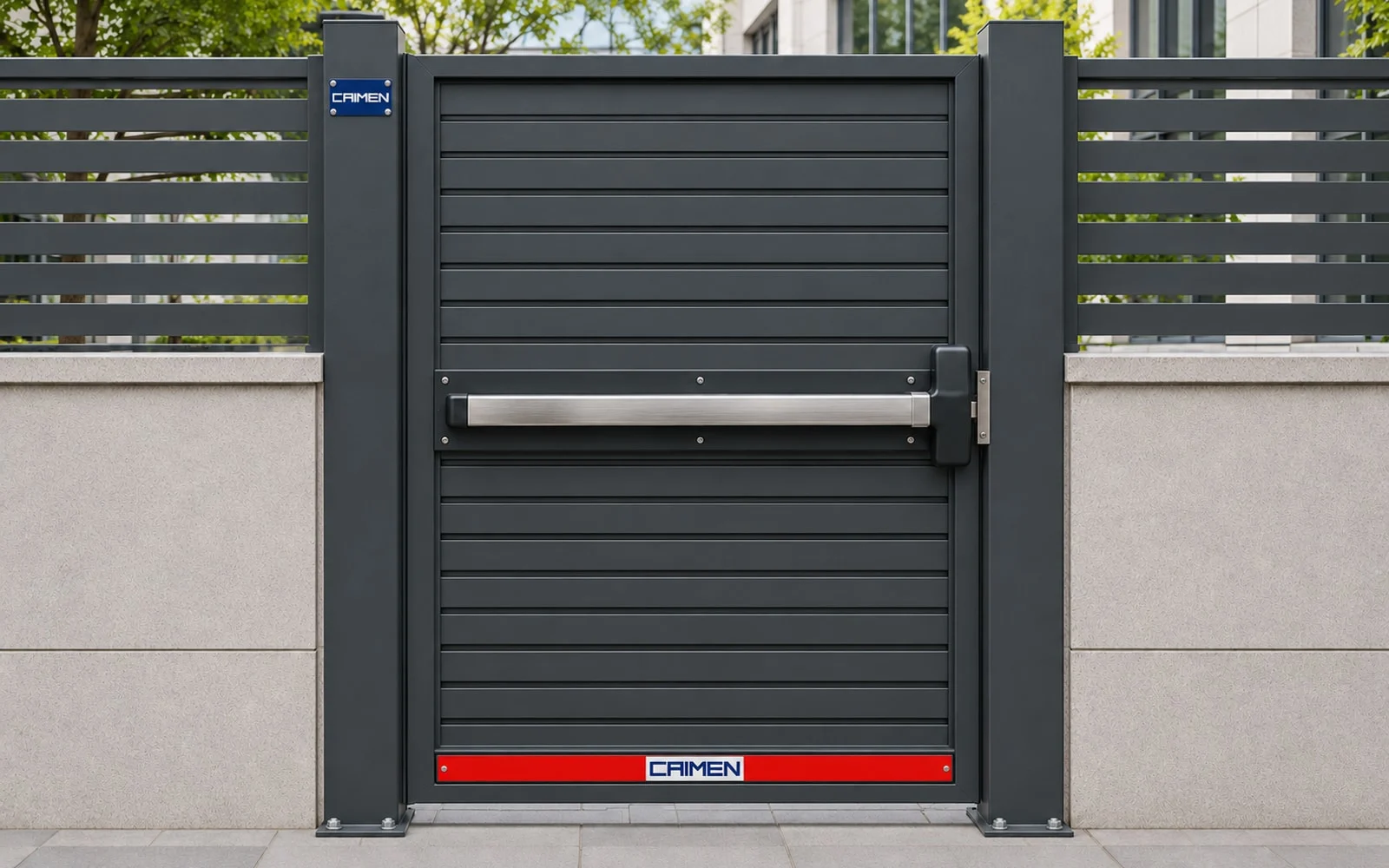
For a gate on a required escape route, an additional drop rod must be reviewed against the approved exit arrangement. A push bar cannot release an unrelated manual bolt. See our gate with panic bar guide for the distinction between exit hardware and other locking functions.
A short maintenance check
- Keep accessible guides and the receiver opening free of loose dirt, within the permitted user-maintenance scope.
- Look for changed gaps, scraping, bent metal or loose-looking fixings. Report changes before they worsen.
- Confirm the rod stays raised during permitted manual operation and seats normally when the leaf is secured.
- Include the receiver after heavy rain, frost or paving work, and follow the hardware manufacturer’s service intervals.
If the same fault returns after cleaning, record where the rod binds and photograph the guides, meeting gap and receiver from a safe position. Those details help the service provider distinguish a hardware fault from movement in the leaf or supports. For CAIMEN gate-frame questions, send that record through our contact page with the gate details.
Frequently asked questions
Is a drop rod the same as a cane bolt?
The names commonly describe a vertical gate bolt that enters a ground receiver. “Drop bolt” can also describe other locking products, so identify the actual mechanism before ordering a replacement. Match the shaft, travel, guides, retaining feature and mounting arrangement.
Why is my gate drop rod hard to lift?
The gate may be pressing the rod against the side of its receiver. Other possibilities include debris, ice, corrosion, a bent shaft or an engaged lock or retaining feature. Secure the gate first, then identify where it binds. Do not pull harder on an unknown locking mechanism.
Can I fit a drop rod to an automatic gate?
The locking arrangement must suit the complete gate system. A manually engaged rod must be fully released and retained clear before powered movement. If automatic locking is required, have the installer specify a compatible solution and operating sequence rather than adding a loose manual step to unattended operation.