A tracked sliding gate gives a sharp clunk at the same spot on every pass. The installer fits a new wheel, but the sound is still there. At CAIMEN, we start with two questions: Does the new wheel groove match the rail, and do both wheels bump when they reach the same spot? If both wheels react at the same place, check that section of track before ordering another wheel. If the problem follows one wheel along the rail, take a closer look at that wheel and how it is mounted.
If you need a replacement wheel, start with the rail profile. Then confirm the wheel dimensions, installed height, bracket and load rating. Two wheels with the same outside diameter can sit at different heights on the same track or use different mounting hardware. Here’s what to check when replacing a wheel, specifying a new ground track or tracing a recurring bump.
Match the load-bearing wheel to the rail profile
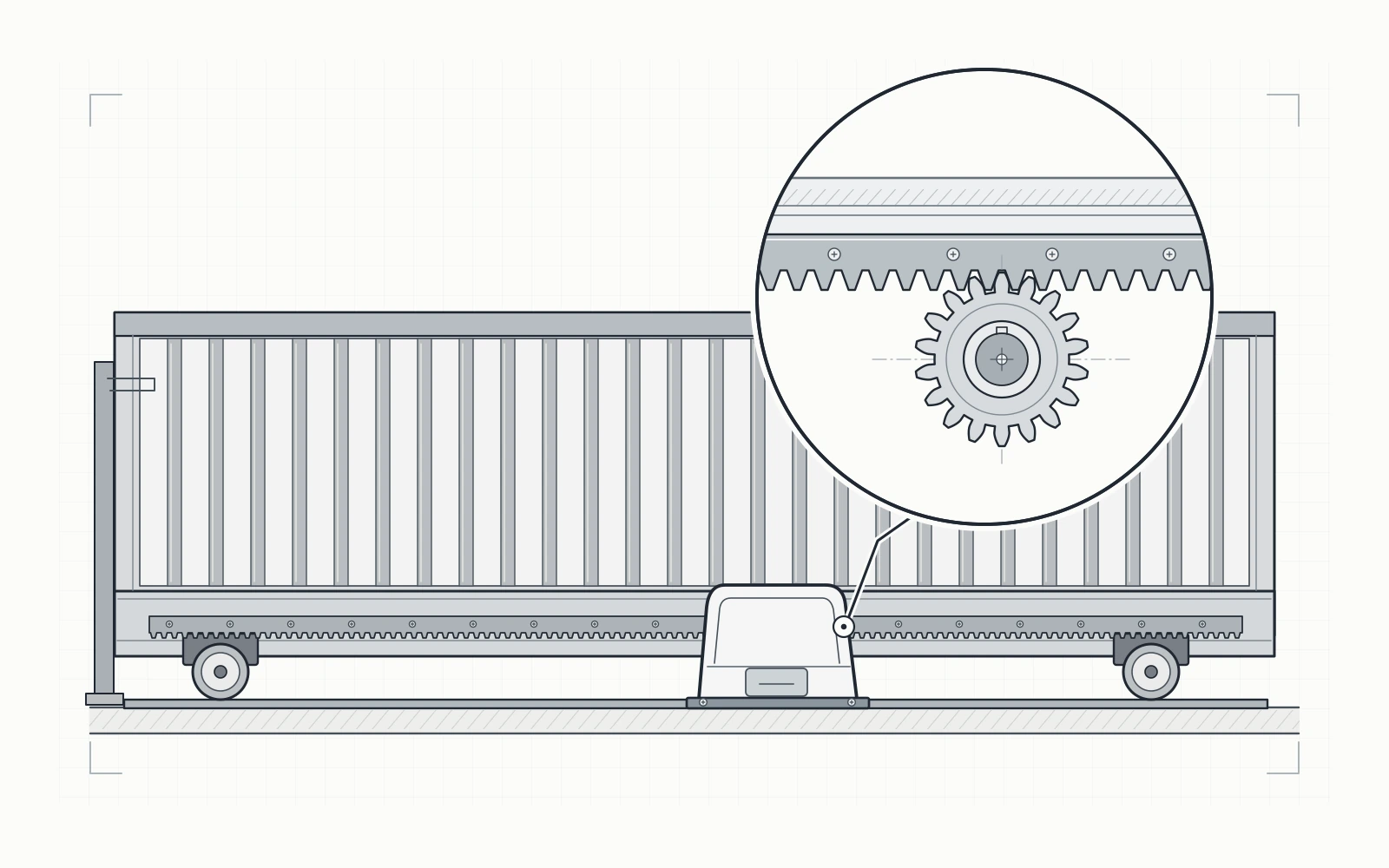
On a sliding gate with wheels, the bottom wheels carry the gate leaf as it moves along a fixed ground rail. The upper guide rollers limit sideways movement. A cantilever gate uses a different support arrangement: its carriages carry the leaf from one side of the opening, without a load-bearing rail across the driveway. If you’re unsure which part you need, see our illustrated guide to sliding gate parts to distinguish a bottom wheel from an upper guide roller or a cantilever carriage.
| Ground rail profile | Matching wheel type | What to verify |
|---|---|---|
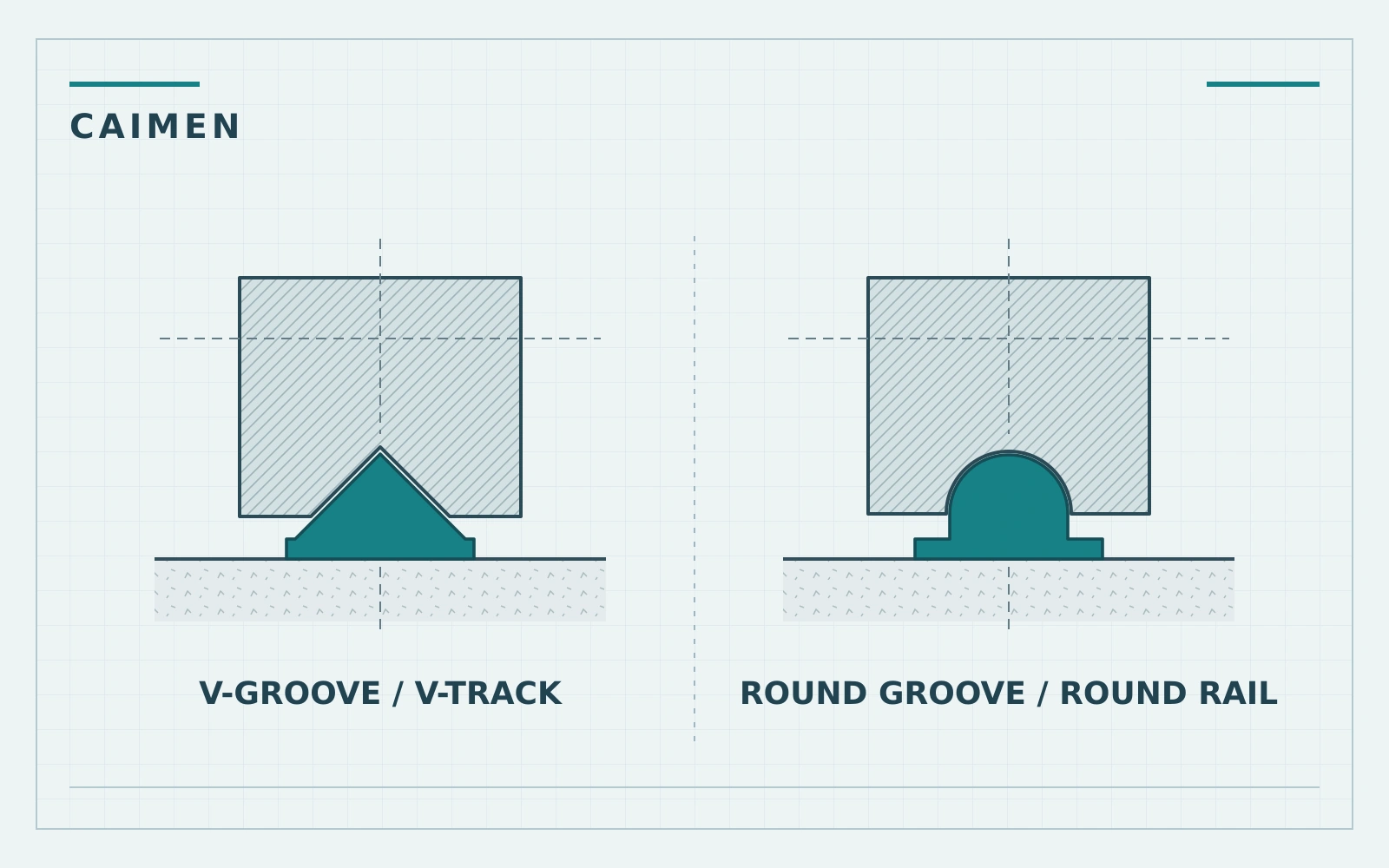
| Raised V-shaped rail | V-groove wheel designed for that rail profile | Check the groove angle, width and depth against the supplier’s profile drawing. Two parts marked “V” do not necessarily fit together. |
| Round-crown rail or round bar | Round-groove wheel sized for the rail head | Check the radius or diameter of the running surface. If the catalog says “U-groove” or “round groove,” compare the actual section drawings. |
| Unclear profile or visibly worn rail head | Identify the original system first | Look for a part number or drawing, or compare a less worn section. A flattened crown or rounded V may no longer show the original profile. |
A V-groove wheel can sometimes roll on a round rail, but that alone doesn’t prove it’s a suitable replacement. The surfaces may touch in the wrong places, affecting how the wheel carries the load and stays centered. Use a wheel and rail combination the supplier confirms as compatible. When you send measurements, identify the rail head separately from the base plate: the width of the mounting plate tells the supplier little about the shape the wheel runs on.
Five things to check before ordering a replacement wheel
- The wheel groove and rail head. Supply a clear view of the rail end and a photo looking straight into the wheel groove, with a scale and any readable part numbers. Note whether a round rail has a raised crown or a full round bar, and whether the V-shaped rail has a rounded or worn tip. If you have only a photo of the old wheel, ask what else the supplier needs to confirm the fit.
- Wheel diameter, width and installed height. Record the outside diameter and width of the old wheel separately from the height of its axle center above the rail. Groove depth can change where the wheel sits even when two wheels share an outside diameter. The resulting change in gate height can affect ground clearance, the upper guides and the receiving catch at the closed position.
- Axle and bracket dimensions. Tell the supplier whether you need the wheel alone, a surface-mount assembly or a recessed assembly inside the bottom rail of the gate. Record the axle diameter, bracket width, mounting hole spacing and the space available within the gate frame. A bracket can bolt into the old holes while still placing the wheel off the track centerline.
- Gate weight and the meaning of the load rating. Allow for the entire moving leaf, including the infill, bottom frame and attached hardware that travels with it. Ask whether the catalog rating applies to one wheel, the complete assembly or just the bearing inside it. Gate weight divided by wheel count is only an average. The position of the weight and differences in track level can leave one wheel carrying more than its share.
- Where the old wheel wears and where the problem occurs. Take note of one-sided groove wear, looseness or binding. Tell the installer whether the fault appears wherever one wheel travels or whenever either wheel passes a specific part of the track. Keep the old part or its identification until the replacement fit has been confirmed.
Agree with the installer on how the gate will be secured and supported before any load-bearing part is removed. If the gate is leaning, has come off the rail, or has a loose wheel bracket or damaged guide, stop using it and arrange an inspection. Running another powered cycle to reproduce the fault can make it worse.
Plan the full ground track before paving
Start with the clear opening and both end positions of the gate leaf. Then mark the actual paths of both wheels, including the section to the side where the gate sits when fully open. The post-to-post width tells you how much clearance vehicles have. On its own, it does not tell you how long to make the rail. Check where track joints, end stops, upper guides and the receiving catch fall on the gate system drawing before setting the rail or finishing the pavement.
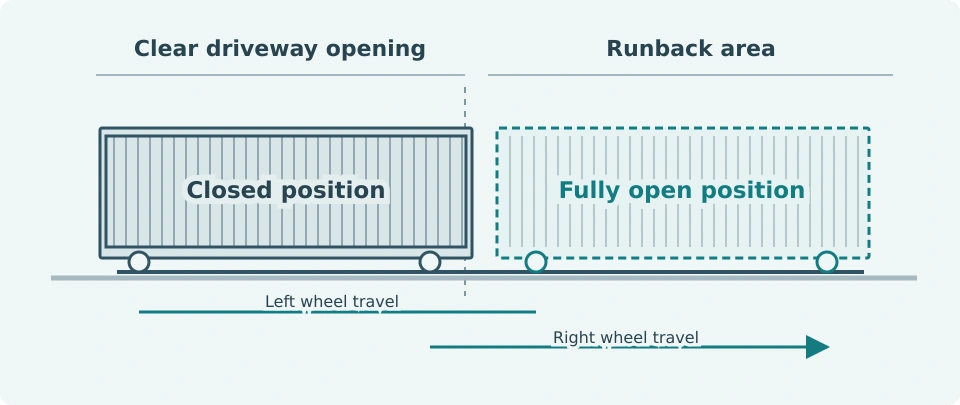
Check the site in two directions. Along the line of travel, look for changes in level or alignment, especially at rail joints and where one paved section meets another. Across the line of travel, check how vehicles cross the rail and where rainwater will flow. A sloping driveway does not automatically mean the track should follow the finished surface. Confirm the proposed rail levels against the gate system’s installation requirements and coordinate them with the paving and drainage plans.
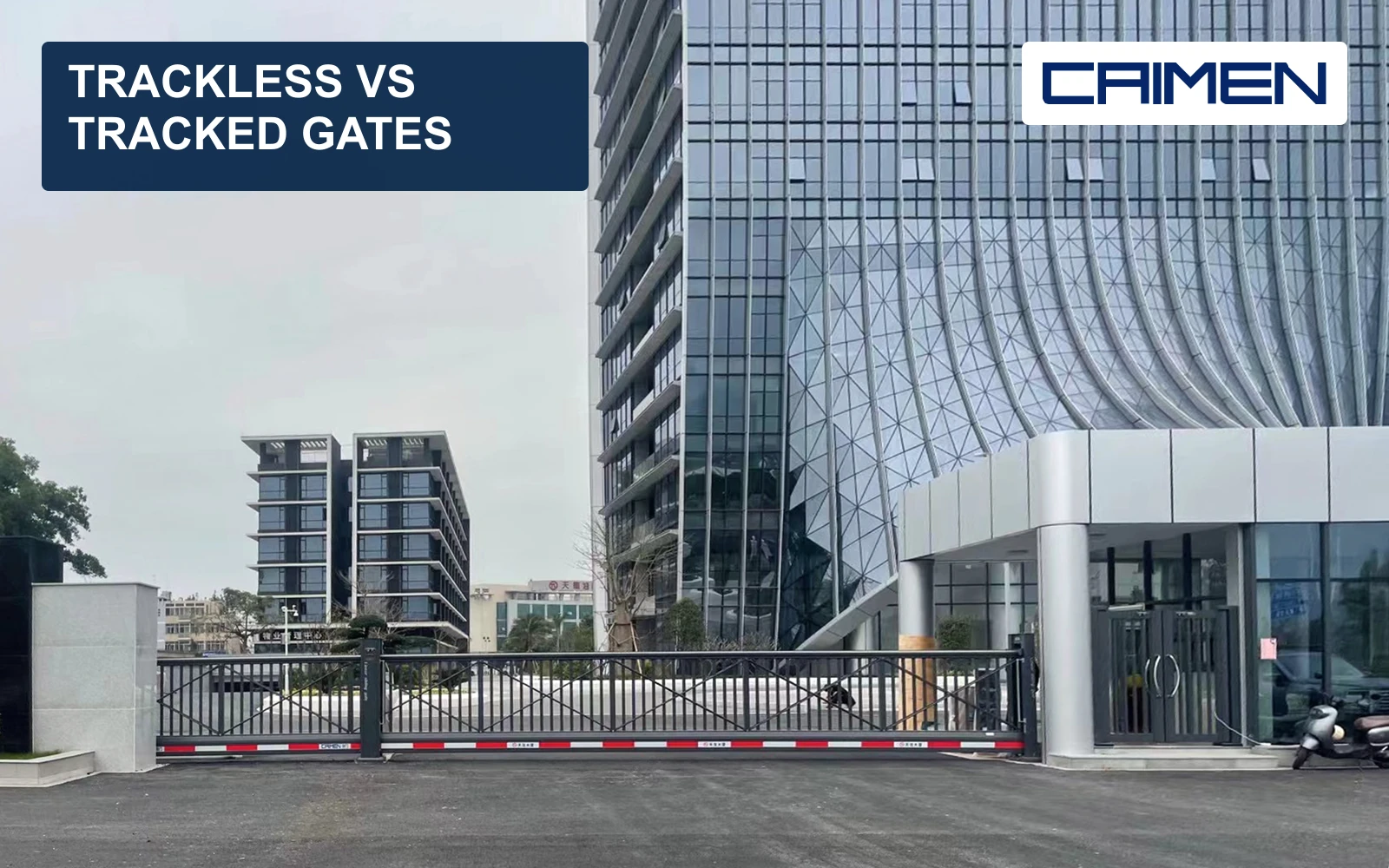
Neither groove shape solves a site drainage problem on its own. Think about what will happen at the actual crossing: where gravel can roll onto the track, where mud settles after a storm, and how the owner will clean the full length of rail. Also check the runback area, which may have different surfacing or drainage than the vehicle opening. If a stable, serviceable ground rail is difficult to provide, compare tracked and trackless sliding gates before committing to a wheel profile.
How to tell a wheel problem from a track problem
| What you notice | Where to look first | What to record |
|---|---|---|
| Both wheels bump at the same joint | Look for a step between rail ends, misalignment, loose fixings or debris. | Mark the location and photograph both sides of the joint. |
| One wheel is noisy at several points along the rail | Have the installer check the bearing, groove wear and bracket alignment with power isolated and the gate secured. | Identify which wheel makes the noise and when it is most noticeable. |
| The gate rubs the upper guide or misses the catch after a wheel change | Compare the old and new installed heights, mounting centerlines and groove profiles. | Note the new part number and photograph the gate’s position at the guide or catch. |
| One section runs poorly after rain or after vehicles pass over it | Check for trapped debris, standing water, loose fixings or local movement of the track base. | Record the location and conditions, including whether the same issue occurs when dry. |
These patterns narrow down the inspection; the sound alone doesn’t confirm the cause. When you call the installer, describe which wheel is involved, where it happens and whether it occurs on opening, closing or both. If the reported problem is “the motor sounds strained,” those details help the installer check for mechanical resistance before investigating the operator. Increasing the operator’s force can hide a symptom without correcting the cause.
Frequently asked questions
Can I replace just one bottom wheel?
Check whether the manufacturer allows a single-wheel replacement. Compare the wear and installed heights at both ends. If the original model is discontinued or the available replacement sits at a different height, ask the installer whether both wheel assemblies need to be changed.
Will a larger sliding gate wheel make the gate run better?
A larger wheel may raise the gate or change how it meets the guides, catch and drive hardware. Check the installed height and the manufacturer’s wheel and rail specifications before changing diameter.
Can I switch from a V-groove to a round-groove wheel on the same track?
Do not assume the new wheel will fit because the diameter is similar. If you want to change rail profile, specify the new wheels and rail together and check the resulting gate height, bracket fit, stops and operator alignment.
Does adding another wheel reduce the load on the other wheels?
It depends on how the wheels share the load. A high point in the track can put extra weight on one wheel and unload another. Follow the gate system’s requirements for wheel count, spacing and track installation.
Should I oil a squeaky ground track?
Find the source of the squeak first and check the manufacturer’s maintenance instructions. Oil won’t fix a loose bracket, a stepped joint or a mismatched wheel. Whether a bearing needs lubrication depends on its design.